
Introduction
Walk onto almost any modern production floor and you'll find fewer relay panels and a lot more screens. Industrial operations are running on software logic now, not just hardwired switches, and the shift touches manufacturing, process industries, and specialty operations like textile services.
That shift creates a real headache for plant managers. Many teams struggle to tell PLC, PC-based control, SCADA, and DCS apart when they're evaluating an automation upgrade, and picking the wrong category can mean a costly retrofit down the road.
This guide breaks down what software-based control systems actually are and walks through the main types and where each one fits. It closes with best practices for selecting and implementing the right solution for your plant.
Key Takeaways
- Software-based control uses computer processing and networked logic instead of hardwired relays or standalone PLCs.
- Four main categories dominate the space: SCADA, PLC programming software, DCS, and HMI platforms.
- Applications range from factory floors to process plants to industrial laundry operations.
- Successful adoption hinges on integration compatibility, scalability, and vendor support.
What Are Software-Based Control Systems?
Software-based control systems are computer-driven platforms that manage machine sequencing, timing, and process logic through software rather than depending solely on hardware relays or a PLC's built-in I/O. The lineage traces back to the early 1970s, when solid-state PLCs began replacing electromechanical relay panels.
Control Engineering notes that PLCs cut wiring errors, took up less floor space, and let engineers change a control scheme by reprogramming instead of rewiring an entire panel. That same logic, taken further, is what drives today's industrial PCs and networked software platforms.
PLC-Only Control vs. Software-Based Systems
There's a meaningful distinction here. Traditional PLCs use built-in or snap-on I/O for deterministic, real-time tasks. They're rugged and simple, which is why Automation World identifies them as the right fit for standalone machines with straightforward logic.
Software-based, PC-based systems go further. They combine:
- Real-time and non-real-time operating environments running side by side
- Distributed I/O networks spanning multiple machines or lines
- Built-in SCADA, database, and IIoT capability without bolting on separate hardware
An industrial PC, in other words, can run the same control logic as a PLC while also hosting recipe managers, protocol converters, and reporting databases.
The Continuous Control Cycle
Every software-based system runs the same basic loop, regardless of industry:
- Acquire data from sensors monitoring temperature, flow, weight, or position.
- Evaluate against setpoints using the control logic engine.
- Execute commands to actuators, motors, or valves.
- Monitor feedback continuously and correct for any deviation.
That loop is the backbone of everything from a packaging line to a wash-aisle control system.
Open-Loop vs. Closed-Loop Control
That loop can run in one of two fundamentally different modes: open-loop or closed-loop. The clearest way to understand the difference is with two everyday examples. A timer-based process, like a kitchen oven set for 20 minutes, is open-loop: it runs on a fixed instruction and doesn't check whether the target was actually reached. A thermostat, by contrast, is closed-loop: it constantly measures room temperature and adjusts heating or cooling to correct for drift.
Control Engineering frames the choice around whether output can be measured and needs correction after disturbances. Closed-loop systems self-correct. Open-loop systems are cheaper and simpler, but only work well when conditions rarely change.
Why Industries Are Shifting Toward Software-Defined Control
That self-correcting capability is one reason plants are moving toward software-defined control, and the market data confirms the shift already underway. MarketsandMarkets projects the global SCADA market will grow from $12.89 billion in 2025 to $20.05 billion by 2030, a 9.2% compound annual growth rate. The same report points to cloud integration, industrial IoT, edge analytics, and infrastructure modernization as the driving forces.
Beyond the market numbers, plants are moving toward software-defined control because it offers:
- Flexibility to reprogram logic without rewiring
- Remote data access for managers who aren't standing on the floor
- Lower total cost of ownership, since IPC hardware runs on mainstream, widely supported components
- Easier IT integration, connecting plant data to ERP and MES systems that used to sit on a separate island
Types of Software-Based Control Systems
Not every plant needs the same tool. Here's how the four main categories break down, plus a couple of emerging ones worth knowing.
- SCADA (Supervisory Control and Data Acquisition): Centralized software that monitors and coordinates data from multiple, often geographically dispersed, machines or sites. It doesn't make split-second control decisions itself; it supervises.
- PLC programming software: Tools like ladder logic, function blocks, and structured text editors, which engineers use to build and test the control logic that eventually runs on a machine-level PLC.
- Distributed Control System (DCS) software: Enterprise-grade software that manages thousands of control loops across multiple processors, with built-in redundancy for large, continuous process operations. Emerson lists oil and gas, chemical processing, and power generation among its core applications.
- HMI (Human-Machine Interface) software: The visual layer that turns raw sensor data into client workspaces, alarms, and operator controls for real-time monitoring.
- Plant-wide and industry-specific management software: Unified platforms combining machine controls, chemical dosing, sorting, and production data into one system. Softrol's Total Plant Management software is one example, giving textile services operations a single entry point for wash-aisle machinery, chemical systems, and garment sortation, from sort to finish.
- Cloud- and edge-based control layers: An emerging category that overlays existing systems, enabling remote monitoring and analytics without replacing the core control hardware underneath.
Real-World Applications and Examples
Theory only gets you so far. Here's where these systems actually show up on a shop floor or in a control room.
Manufacturing and production lines. Software-based logic sequences conveyors, motors, pumps, and valves so assembly and packaging lines stay synchronized.
At Concours Mold, a retrofit replaced PC-based control with a modern digital control system on one machining center. Modern Machine Shop reported that cut time on that machine dropped from 300 hours to 110 hours.
Process industries. Oil and gas, chemical processing, and power generation depend on DCS and SCADA software to run continuous, safety-important processes across sprawling facilities. Upstream oil and gas operators, for instance, often use SCADA to connect remote telemetry units at scattered well pads, cutting down on site visits.
Building and facility automation. HVAC and energy management systems use software-based control to regulate climate, lighting, and security in real time, often through the same SCADA and HMI principles used on a production floor.
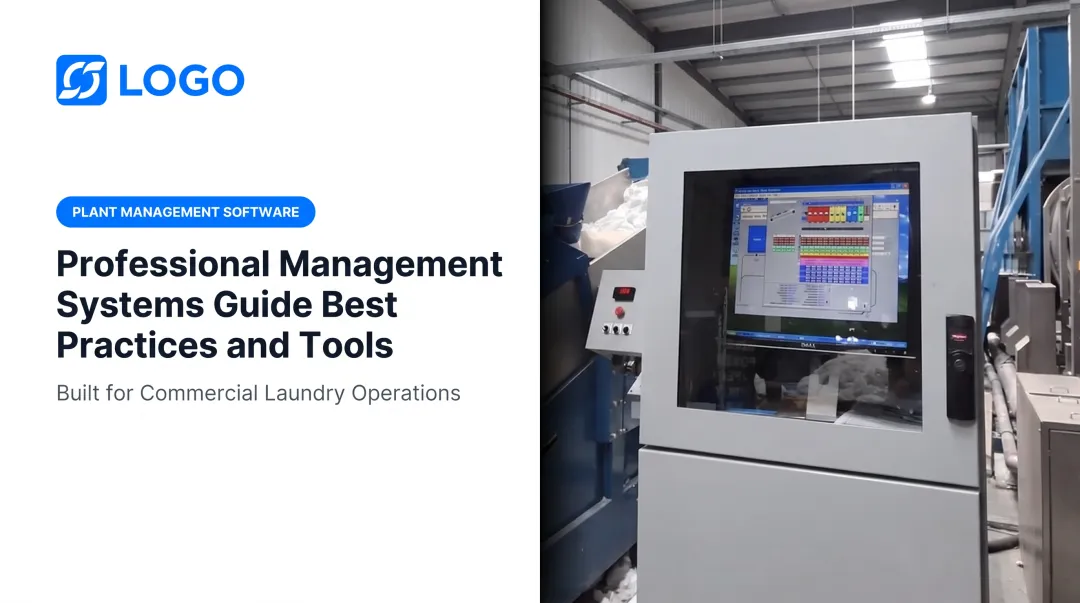
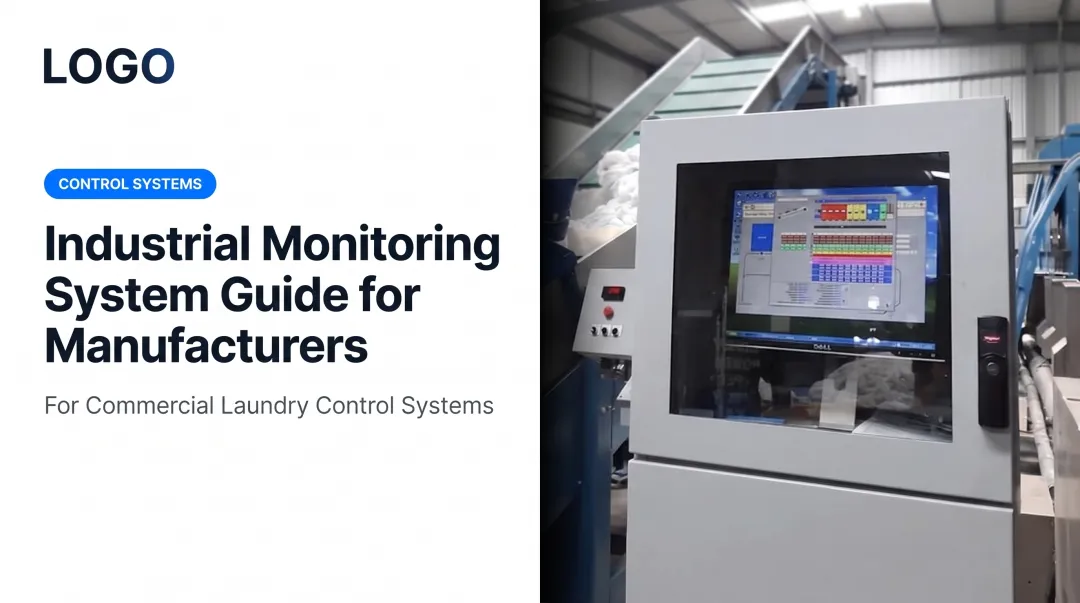
Industrial and institutional laundry operations. This is where the connection to Softrol's own product line becomes concrete. Softrol's MicroPulse machine controls and ChemPulse chemical dispensing systems govern wash-aisle machinery, automated chemical dosing, and garment sortation.
By 2005, Softrol had shipped its 500th machine control and its 500th chemical dispensing installation. The technology has continued to expand across uniform, linen, and healthcare laundry operations since.
Remote and cloud client workspaces. These extend every application above. Softrol's LOIS (Laundry Operation Information System) gives plant managers browser-based access to throughput, machine utilization, and production data from a phone, tablet, or PC. Real-time email alerts flag issues immediately, whether managers are on-site or halfway across the country.
Best Practices for Selecting and Implementing Software-Based Control Systems
Choosing the wrong platform is expensive to undo. These four steps reduce that risk considerably.
Assess operational requirements first. Before comparing vendors, nail down your batch tracking needs, real-time response demands, and remote access priorities. A plant running 24/7 has different needs than one with a single shift.
Verify compatibility with existing systems. Check that any new platform talks to your current PLCs, sensors, and ERP or MES systems through standard protocols. The Modbus specification is built specifically for device interoperability. OPC UA extends that further, supporting everything from embedded controllers to cloud infrastructure with built-in encryption and certificate authentication. Skipping this step is how retrofits balloon in cost.
Plan for scalability from day one. Pick a system that can absorb more capacity, new sites, or future cloud and AI features without a full rebuild. Softrol's approach illustrates this well. SoftSort garment sortation systems scale from roughly 1,500 garments per day up to more than 50,000. Total Plant Management uses a centralized, modular architecture that can incorporate additional production points and facilities as a customer grows.
Prioritize vendors with real support, not just a sale. Turnkey installation, technical support, and ongoing maintenance matter more once the system is running than they do during the sales pitch. Softrol has built its onboarding process around milestone reviews and open communication with customers before, during, and after installation. That kind of support matters when something needs troubleshooting six months in, not just on day one.
Benefits and Future Trends in Software-Based Control
This shift delivers a clear operational payoff. Core benefits include:
- Increased plant efficiency through automated sequencing and fewer manual handoffs
- Reduced labor costs, since one operator can often oversee tasks that once required several
- Improved oversight with centralized client workspaces instead of scattered logs
- Real-time alerts that let teams respond to issues before they become downtime
Vendor case data backs this up. Siemens reports that customers using its ACM Suite optimization software in machining operations cut cycle time by 6% to 12% in one case. In another, a customer saved 487 machining hours over six months and reduced tool costs by 20%. These figures come from individual cases in a different manufacturing sector rather than industry averages, but they show the range of what's achievable when plants shift to software-based control.
Looking ahead, two trends are shaping where this technology goes next:
- Cloud and edge architectures. Automation World describes hybrid setups combining edge devices with cloud infrastructure as increasingly standard in manufacturing, since processing data near its source reduces transfer lag and supports faster predictive maintenance.
- AI and machine learning integration. These tools can flag developing equipment faults earlier than manual inspection alone, though they still depend on clean, relevant data and a workflow that lets maintenance teams actually act on the predictions.
Frequently Asked Questions
What are the main types of software-based control systems?
The primary categories are SCADA, PLC programming software, DCS, and HMI platforms. Each serves a different scale, from supervising multiple sites to programming logic for a single machine.
What are some examples of software-based control system applications?
Common examples include manufacturing lines, process industries like oil and gas, and building automation. Industrial laundry operations also rely on software-based logic, running chemical dosing, wash-aisle controls, and garment sortation.
What is the difference between software-based and hardware-based (PLC) control systems?
PLCs rely on built-in I/O for deterministic, real-time tasks and work best on standalone machines. Software-based systems blend real-time and non-real-time processing, adding broader networking, database access, and IIoT capability.
Are software-based control systems more cost-effective than traditional PLC systems?
Often, yes. Because industrial PC hardware and software are mainstream, purchase and maintenance costs for comparable processing power tend to run lower. The right choice still depends on the specific application.
How do software-based control systems improve plant efficiency?
They combine real-time monitoring, automated sequencing, and remote alerts, which cuts downtime and reduces the need for manual intervention across the plant floor.
What should businesses consider when upgrading to a software-based control system?
Integration compatibility with existing equipment, scalability for future growth, and the vendor's support track record are the three factors that matter most before committing to an upgrade.