Seamless washing machine integration systems transform these operations through automation, real-time monitoring, and centralized control. These industrial-grade platforms connect commercial washing equipment to centralized management systems via IoT technology, delivering 40% freshwater savings and 10% energy reduction while enabling single-operator control of entire wash aisles. This article explores how integration systems work, their core components, implementation considerations, and the measurable benefits they deliver to commercial laundry operations.
TLDR:
- Industrial laundry integration connects washing equipment to centralized control platforms via PLCs, sensors, and communication protocols like OPC UA
- Automated systems reduce manual monitoring by 80% and can double productivity in specific processing lines
- Facilities achieve 40% water savings, 10% energy reduction, and 30% less unplanned downtime through predictive maintenance
- Integration provides complete wash cycle documentation essential for healthcare and regulated industries
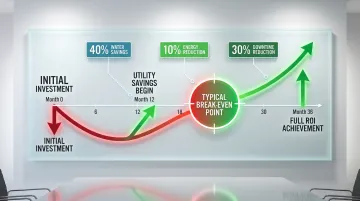
- ROI typically occurs within 18-36 months through utility savings, labor optimization, and reduced equipment downtime
What is Seamless Washing Machine Integration?
Seamless washing machine integration refers to the connectivity of commercial washing equipment to centralized control systems via IoT technology and automation platforms.
Unlike consumer "smart" washers that offer basic app connectivity and cycle notifications, industrial integration systems are purpose-built for high-volume, continuous operation with enterprise-grade features.
The fundamental distinction lies in scale, durability, and capability. Consumer smart appliances typically connect individual machines to smartphone apps for basic monitoring.
Industrial systems create unified control networks that manage dozens of machines simultaneously across multiple locations. These networks process thousands of pounds of laundry daily while maintaining deterministic control and standardized data models.
Understanding this scale requires examining the technical architecture that makes it possible.
Core Components of Integration Architecture
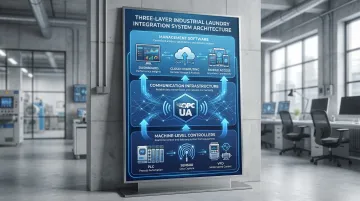
Industrial laundry integration relies on three interconnected layers that work together to create seamless operation from sort to finish:
Machine-Level Controllers and Sensors:
- Programmable Logic Controllers (PLCs) interface directly with washing machine operations
- Sensors capture operational data including cycle status, water usage, temperature readings, and chemical dispensing volumes
- Variable Frequency Drives (VFDs) control motor speed for enhanced performance and energy efficiency
- Input/Output (I/O) modules collect real-time data from mechanical systems
Communication Protocols and Network Infrastructure:
- OPC UA serves as the standard for secure, manufacturer-independent data exchange between equipment
- Legacy Modbus protocols bridge older devices to modern networks
- Network architecture enables machine-to-cloud data transmission with encryption and security protocols
- Distributed control platforms provide control isolation and system reliability
Centralized Management Software Platforms:
- Dashboard interfaces aggregate data from multiple machines and locations
- Real-time monitoring displays machine status, cycle progress, and performance metrics
- Automated reporting generates productivity analysis, utilization rates, and maintenance alerts
- Remote access capabilities enable management from any device with browser access
These components create a unified ecosystem where data flows automatically from individual machines through network infrastructure to centralized platforms. This enables operators to monitor and control entire operations from one interface.
Key Components of Industrial Laundry Integration Systems
Machine Control Hardware
Programmable Logic Controllers (PLCs) function as the central processors for integrated washing systems, executing programmed wash formulas while continuously monitoring equipment performance.
These industrial-grade controllers interface with washing machine operations through dedicated I/O modules that manage everything from water valve timing to drum rotation speeds.
Sensor technologies provide the data foundation for intelligent control:
- Water level sensors ensure precise fill volumes for optimal wash efficiency
- Temperature probes monitor wash water and rinse temperatures to verify proper sanitization
- Chemical dispensing sensors track volumetric injection and verify delivery
- Vibration monitors detect mechanical anomalies before they cause failures
- Flow meters measure water consumption and chemical usage for each cycle
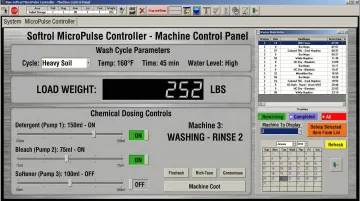
Softrol's MicroPulse controls demonstrate this integration approach with precise machine-level automation that interfaces with broader plant management systems.
The MicroPulse Controller delivers ratio-metric washing that adjusts chemical and water usage based on actual load weights, while automated drying algorithms end heat cycles when target moisture removal is achieved, significantly reducing fuel consumption.
Communication Infrastructure
Industrial laundry environments require robust connectivity that maintains reliability despite heat, humidity, and electromagnetic interference.
Wired vs. Wireless Connectivity:
- Ethernet connections provide the most reliable option for stationary equipment, delivering consistent bandwidth and minimal latency
- Cellular connectivity enables remote monitoring and management without dependence on facility internet infrastructure
- WiFi networks offer flexibility for mobile devices and temporary installations, though industrial-grade access points are essential for reliability
Data Protocols:
| Protocol | Application | Key Characteristics |
|---|---|---|
| OPC UA | Primary machine-to-machine and device-to-cloud communication | Secure, manufacturer-independent, supports complex data models |
| Modbus | Legacy device integration | Simple, widely supported, can be bridged to OPC UA |
| PROFINET | Siemens-based environments | Enables vertical integration, supports functional safety |
OPC UA has emerged as the industry standard due to its security features, interoperability, and ability to represent complex machine data in standardized formats that different vendors can interpret.
Management Software Platforms
Centralized platforms transform raw machine data into actionable operational intelligence through intuitive interfaces and powerful analytics.
Core Platform Features:
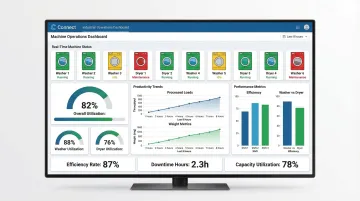
- Dashboard views displaying real-time status of all connected equipment
- Customizable reporting for production metrics, utility consumption, and equipment utilization
- Alert systems that notify managers of machine errors, cycle completions, or performance anomalies
- Remote control capabilities for adjusting wash formulas and machine parameters
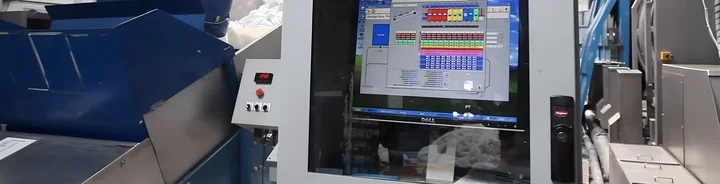
Softrol's PulseNet management software demonstrates the power of comprehensive integration. The platform enables single-point control across entire laundry operations, with touchscreen SmartStations at workstations and large-screen Message Centers providing at-a-glance performance monitoring. Facilities like Faultless Linen achieved 35% increases in Pounds Per Operator Hour within four months of implementing PulseNet's integrated monitoring.
Mobile Access Capabilities:
Modern platforms provide 24/7 access through responsive web interfaces that work on smartphones, tablets, and desktop computers. Softrol's LOIS (Laundry Operation Information System) exemplifies this approach, sending real-time alerts directly to email addresses while enabling managers to access multiple sites from a single user account. This mobility ensures operational visibility regardless of physical location.
Integration with Ancillary Systems
Complete integration extends beyond washing machines to encompass the entire laundry processing workflow.
Chemical Dispensing Integration:
Automated chemical systems receive formula specifications directly from wash controllers, eliminating manual programming errors. Softrol's Catalyst chemical injection systems use flow meter-based technology that provides volumetric injection verification and water flush confirmation, with alarms triggering immediately when delivery failures occur.
Utility Management Connections:
Integration with water treatment systems optimizes resource consumption by adjusting wash parameters based on incoming water quality. Energy management systems coordinate wash timing with utility rate structures to minimize operating costs during peak-rate periods.
Total Plant Automation:
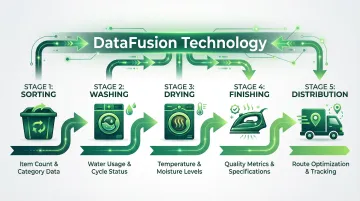
The most advanced implementations connect washing systems with sorting equipment and downstream finishing machinery. Softrol's DataFusion technology enables seamless communication between wash, dry, and rail systems, automatically transferring both goods and processing information from machine to machine. This creates complete traceability where every load's journey through the facility is documented from sort to finish.
Benefits of Seamless Integration for Commercial Laundry Operations
Operational Efficiency Gains
Automated cycle management eliminates the constant manual monitoring that traditionally consumes operator time. Research shows automation can reduce manual data collection efforts by approximately 80%.
This frees staff to focus on quality assurance and exception handling rather than routine machine checks.
Real-time machine status visibility transforms workflow planning. Instead of physically checking machines to determine availability, operators view complete plant status on centralized dashboards.
This visibility enables better load sequencing and reduces idle time between cycles.
Labor Reallocation Opportunities:
Integration enables significant workforce optimization. Mission Linen & Uniform Service achieved a 77% reduction in sorting labor through Softrol's automated sorting systems, reducing staffing from 13 operators across two shifts to just 3 operators.
Similarly, Aramark Uniform Services transitioned to single-operator control of their entire wash aisle through AutoPulse automation, eliminating manual handling between washers, dryers, and conveyors.
Cost Reduction Through Optimization
Utility savings represent one of the most immediate financial benefits of integration. Precise automated control delivers measurable resource reductions:
- Water savings: Integrated water management achieves approximately 40% freshwater savings (4.5 liters per kg of laundry) through optimized fill levels and reuse systems
- Energy reduction: Process optimization yields 10% energy usage reduction (0.15 kWh per kg)
- Chemical optimization: Ratio-metric dispensing adjusts chemical volumes to actual load weights, eliminating waste from fixed-dose systems
Predictive Maintenance ROI:
Predictive maintenance reduces unplanned downtime by 30% by identifying developing issues before they cause failures. This shifts maintenance from expensive emergency repairs to planned interventions during scheduled downtime. Equipment lifespan extends as systems prevent the cascading damage that occurs when minor issues go undetected.
ROI Timeline:
Most commercial laundry operations see return on investment within 18-36 months. Facilities with higher baseline utility costs and labor expenses typically achieve faster payback. For instance, Wildman Uniform and Linen documented two-year payback periods on both their initial automation installation and subsequent expansion, demonstrating consistent value delivery.
Enhanced Quality Control
Consistent, programmed wash formulas eliminate the variability inherent in manual operation. Every cycle executes with identical temperatures, chemical dosing, and mechanical action.
This ensures uniform cleaning results regardless of which operator is on duty.
Automated systems maintain precise wash parameters that minimize quality failures, directly reducing rewash rates. High rewash rates decrease operational efficiency by consuming resources for reprocessing.
Traceability for Regulated Industries:
Healthcare and food service laundries face strict hygiene regulations requiring complete wash cycle documentation. Integrated systems provide automatic recording of:
- Wash temperatures with verification that minimums were achieved
- Chemical injection volumes and timing
- Cycle duration and mechanical action parameters
- Load identification and processing history
This documentation simplifies regulatory compliance and audit processes, with systems designed to hospital infection control standards ensuring every garment's wash cycle can be verified.
Data-Driven Decision Making
Integrated systems generate actionable insights that transform how facilities operate and plan for growth.
Operational Analytics:
- Throughput analysis identifies which equipment and processes limit capacity
- Machine utilization rates reveal underused assets and bottlenecks
- Historical trend analysis shows seasonal patterns and long-term efficiency changes
- Comparative reporting highlights performance differences between shifts or facilities
Platforms like Spindle transform raw operational data into insights that identify specific bottlenecks and optimization opportunities as they occur. This visibility enables managers to make informed decisions about labor allocation, equipment investment, and process improvements based on actual performance data rather than assumptions.
Reduced Downtime and Faster Response
Manual discovery of equipment issues creates significant delays, as operators may not notice problems until their next routine check—potentially hours after a failure occurs. Real-time alerts eliminate this lag by notifying managers immediately when issues arise.
AI-powered observability and remote diagnostics reduce Mean Time to Resolution by 50-70% by eliminating manual investigation steps. When a machine triggers an alert, the system provides specific diagnostic information that helps technicians identify root causes quickly rather than spending hours troubleshooting.
Remote diagnostics enable faster repair scheduling. Service technicians can review system data before arriving on-site, ensuring they bring the correct replacement parts and reducing multiple-trip scenarios that extend downtime.
Implementation Considerations for Integration Systems
Equipment Compatibility Assessment
Start by evaluating your existing washing machines for integration capabilities. Newer commercial equipment typically includes communication interfaces that simplify connectivity, while older machines may require external controllers and sensors.
Many commercial washers can be retrofitted with Softrol's MicroPulse controls, which extend equipment life while adding modern automation capabilities. The extent of retrofit feasibility depends on machine age and manufacturer, making equipment audits essential for accurate project planning.
Network Infrastructure Requirements
Reliable connectivity forms the foundation of successful integration. Key infrastructure considerations include:
- Internet connectivity: Assess bandwidth needs based on the number of connected devices and data transmission frequency
- Network segmentation: IEC 62443 standards recommend isolating machine networks from broader facility networks through firewalls
- Encryption protocols: TLS 1.3 provides secure communication, though TLS 1.2 compatibility may be necessary for legacy systems
- Authentication systems: Implement role-based access control (RBAC) and two-factor authentication to restrict system access
Cybersecurity Measures
Industrial IoT systems require security approaches distinct from traditional IT infrastructure. Essential measures include:
- Encrypted VPN tunnels for remote access
- Certificate-based authentication for connected devices
- Regular security audits to identify vulnerabilities
Network segmentation prevents unauthorized access to critical control systems even if other facility networks are compromised.
Staff Training Programs
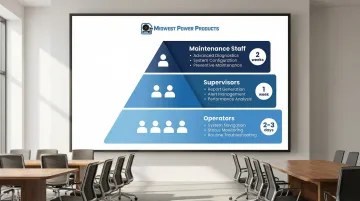
Modern integration platforms feature intuitive touchscreen interfaces similar to smartphone apps. Most operators become proficient within days.
Comprehensive training should address multiple skill levels:
- Operators: Basic system navigation, status monitoring, and routine troubleshooting
- Supervisors: Report generation, alert management, and performance analysis
- Maintenance staff: Advanced diagnostics, system configuration, and preventive maintenance protocols
Softrol's systems reduce training requirements through user-friendly design. Touchscreen operation and visual system layouts accelerate learning curves compared to traditional control panels.
Remote Monitoring and Data Management Capabilities
Remote access features enable managers to monitor operations from any location via web portals or mobile apps. Softrol's LOIS system exemplifies comprehensive remote capabilities, providing 24/7 access to critical plant performance data from smartphones, tablets, and PCs using standard browsers. This accessibility ensures operational visibility regardless of physical location or time of day.
Real-Time Alert Systems
Proactive notification systems change how facilities respond to operational issues. The system alerts managers of machine errors, cycle completions, or performance anomalies via email or SMS. This enables immediate response even when personnel aren't physically present. Effective alarm management following ISA 18.2 standards can reduce urgent alarm loads by 84-92%, eliminating nuisance alerts that cause operator fatigue while ensuring critical issues receive prompt attention.
Reporting and Analytics Capabilities
Beyond real-time alerts, integrated systems provide analytical tools that convert operational data into actionable insights.
Key reporting capabilities include:
- Customizable dashboards that display metrics most relevant to specific roles and responsibilities
- Historical trend analysis revealing seasonal patterns, equipment degradation, and process improvements over time
- Automated performance reports delivered on scheduled intervals without manual data compilation
- Comparative analytics showing performance differences between shifts, facilities, or time periods
Softrol's PulseNet system provides instant access to production reports from office PCs, eliminating the supervisory time previously spent manually entering data for daily reporting. Large-screen Message Centers display all employee performance at a glance, so supervisors identify bottlenecks immediately rather than discovering issues at end-of-day reporting.
Data Security Considerations
Industrial systems protect operational data through multiple security layers. OPC UA employs X.509 certificates for authentication, with Global Discovery Servers managing certificates centrally to streamline security administration.
End-to-end encryption protects data in transit, and access controls ensure only authorized personnel can view sensitive operational information. Hardware security elements like Trusted Platform Modules (TPM) provide additional protection for cloud-connected systems.
Frequently Asked Questions
Can existing commercial washing machines be retrofitted with integration technology?
Many commercial washers can be retrofitted with external controllers and sensors, though feasibility depends on machine age and manufacturer. Softrol's MicroPulse controls offer retrofit solutions that extend equipment life while adding modern automation capabilities.
What is the typical ROI timeline for implementing a washing machine integration system?
Most commercial laundry operations see ROI within 18-36 months through utility savings, labor optimization, and reduced downtime. Facilities with higher labor costs and resource consumption typically achieve faster payback.
How does seamless integration improve compliance for healthcare and institutional laundries?
Integration systems provide complete wash cycle documentation including temperature verification, chemical tracking, and cycle parameter recording. This automated evidence simplifies regulatory compliance and audit processes for every processed load.
What happens if internet connectivity is lost in an integrated laundry system?
Well-designed systems include local control capabilities where machines continue operating with stored programs while logging data locally. This ensures continuous operation during network outages with no loss of production or data.
How difficult is it to train staff on integrated washing machine systems?
Modern integration platforms feature intuitive interfaces similar to smartphone apps, with most operators becoming proficient within days. Advanced management features may require additional training for supervisory staff.
Can integration systems work with mixed brands of washing equipment?
Advanced integration platforms communicate with multiple equipment brands through standard protocols like OPC UA or custom interfaces. This enables unified control in facilities with mixed-equipment installations, though complexity varies by model.