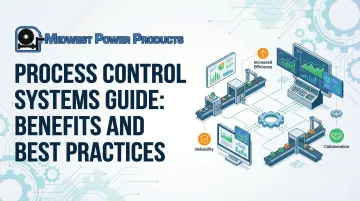
Managing complex industrial processes manually creates constant challenges: inconsistent quality, wasted resources, safety risks, and missed production targets. Process control systems (PCS) solve these problems by automating the monitoring and adjustment of industrial operations in real-time, maintaining optimal conditions without constant human intervention.
This guide covers the fundamental types of process control systems, their measurable benefits, essential components, implementation best practices, and real-world applications in industries like textile services and manufacturing. Whether you're evaluating your first automated control system or optimizing existing operations, you'll find actionable insights to improve efficiency, quality, and profitability.
TLDR: Quick Takeaways
- Process control systems automate monitoring and adjustments, delivering efficiency gains of 35% or more
- Four main types (open-loop, closed-loop, DCS, SCADA) serve applications from simple to complex operations
- Benefits include up to 77% lower labor costs, predictive maintenance, enhanced safety, and 2-5 year ROI
- Success requires phased rollout, comprehensive training, and continuous optimization with real-time data
- Textile facilities gain advantages through automated wash controls, chemical dispensing, and material handling
What Are Process Control Systems?
Process control systems are integrated networks of sensors, controllers, and actuators that automatically manage industrial processes without continuous human intervention.
These systems monitor critical variables (temperature, pressure, flow rate, chemical concentration, and dozens of other parameters) and make instant adjustments to maintain desired setpoints.
The fundamental difference between manual and automated control is response time and consistency:
- Manual control: Human operators notice deviations, decide on corrections, and implement adjustments (a process taking minutes or hours)
- Automated control: Systems detect variations in milliseconds and apply precise corrections immediately, maintaining tighter tolerances and more consistent output
How feedback loops work:
- Sensors continuously measure process variables
- Controllers compare measurements to desired setpoints
- Actuators adjust the process based on controller commands
- The process responds to adjustments
- The cycle repeats continuously
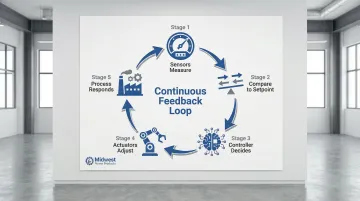
This principle works like a home thermostat controlling room temperature. When the temperature drops below your setpoint, the thermostat (controller) signals the furnace (actuator) to activate. The temperature sensor continuously monitors the room until the setpoint is reached, then signals the furnace to stop.
Industrial process control systems operate on the same principle but manage dozens or hundreds of variables simultaneously with far greater precision.
Types of Process Control Systems
Open-Loop Control Systems
Open-loop systems operate on preset instructions without feedback from the process. They execute programmed sequences regardless of actual process conditions, making them suitable only for simple, predictable operations.
Common applications:
- Timed sprinkler systems that run for predetermined durations
- Basic conveyor systems operating at fixed speeds
- Simple batch timers for repetitive processes
Limitations: Open-loop systems cannot compensate for variations in input materials, environmental conditions, or equipment performance, making them inadequate for processes requiring precision or consistency.
Closed-Loop Control Systems
When precision matters, closed-loop systems use continuous feedback to adjust operations dynamically.
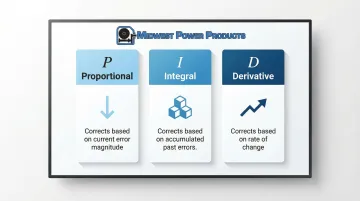
PID (Proportional-Integral-Derivative) controllers calculate corrections based on the difference between actual measurements and desired setpoints.
PID control components:
- Proportional: Correction proportional to current error
- Integral: Correction based on accumulated past errors
- Derivative: Correction based on rate of error change
Industrial examples include temperature control in heat exchangers, pressure regulation in compressed air systems, and flow control in chemical dosing applications.
Distributed Control Systems (DCS)
DCS distribute control functions across multiple processors rather than relying on a single central controller.
This architecture provides superior reliability and scalability for large-scale operations.
Key advantages:
- Control isolation prevents single-point failures
- Modular design simplifies expansion
- Redundant processors ensure continuous operation
- Local control continues even if central systems fail
Chemical plants, refineries, and large manufacturing facilities deploy DCS to manage hundreds of control loops simultaneously. Industrial laundry operations also benefit from distributed control architectures—Softrol Systems implements DCS principles in wash aisle automation and garment sorting systems, where multiple processing zones require coordinated yet independent control.
SCADA Systems
Supervisory Control and Data Acquisition (SCADA) systems monitor and control geographically dispersed operations. While DCS handles continuous process control within a facility, SCADA excels at remote monitoring and supervisory control across multiple sites.
Typical applications:
- Municipal water treatment facilities monitoring distribution systems
- Oil and gas pipelines spanning hundreds of miles
- Electric utility grids managing generation and distribution
- Multi-site manufacturing operations requiring centralized oversight
Modern SCADA systems use protocols like DNP3, MQTT, and OPC-UA to transmit data securely from field sensors to central control rooms, enabling real-time decision-making across distributed operations.
Hybrid Systems
After understanding individual system types, it's important to recognize that many facilities don't rely on just one approach.
Hybrid systems combine batch and continuous control strategies to handle complex manufacturing processes. They might use continuous control for base processes while implementing batch control for specialty products or quality adjustments.
Key Benefits of Process Control Systems
Operational Efficiency
Process control systems optimize resource usage by maintaining processes at ideal operating points continuously. Smart water grid technology alone could generate annual global savings of up to $12 billion for utility companies through improved monitoring and control.
Documented efficiency gains:
- Faultless Linen achieved 35% increase in Pounds Per Operator Hour (PPOH) within four months of implementing process control systems, improving from 90 to 140 PPOH
- Automated systems reduce processing time by eliminating manual adjustments and operator delays
- Optimized chemical dosing reduces consumption while maintaining quality
- Precise temperature control minimizes energy waste
Consistent Product Quality
Beyond efficiency gains, process control systems deliver the consistency that quality standards demand. Tight control of process variables ensures uniformity across production runs, reduces defects, and reliably meets specifications.
Automated systems maintain setpoints within narrow tolerances that human operators cannot match consistently. In textile processing, automated wash controls manage temperature, chemical dispensing, and cycle timing to deliver consistent results regardless of operator experience or attention levels. This consistency translates directly to reduced customer complaints and lower rework costs.
Enhanced Safety
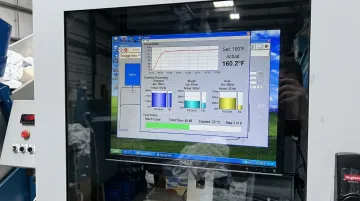
Process control systems continuously monitor critical parameters and trigger alarms when conditions approach hazardous thresholds. The EPA requires continuous monitoring of disinfectant residuals in drinking water, with backup grab sampling every 4 hours only when continuous equipment fails, demonstrating regulatory recognition of automated monitoring's safety benefits.
Safety improvements:
- Automatic shutdown when temperature, pressure, or chemical levels exceed safe limits
- Real-time alerts notify operators of developing hazards before accidents occur
- Elimination of manual tasks in dangerous environments
- Documentation of all process conditions for incident investigation
Predictive Maintenance
Real-time data collection identifies equipment wear patterns before failures occur. Process control systems track parameters like vibration, temperature, pressure differentials, and cycle times to detect degradation.
This continuous monitoring enables proactive maintenance scheduling that prevents costly unplanned downtime. For example, pH electrodes typically last 1-2 years with proper maintenance, and automated monitoring systems alert operators when calibration drift indicates replacement is needed.
Cost Reduction
Process control systems deliver measurable ROI through multiple channels:
Labor savings:
- Mission Linen achieved 77% reduction in sorting labor through automated process control
- Aramark reduced workforce by 70% while maintaining throughput
- Single operators manage entire wash aisles previously requiring multiple staff
Energy and resource savings:
- Optimized chemical dosing reduces consumption and waste
- Precise temperature control minimizes energy usage
- Reduced water consumption through accurate flow control
Equipment longevity:
- Preventative maintenance extends equipment life
- Optimal operating conditions reduce wear
- Early problem detection prevents catastrophic failures
Payback periods: Wildman Uniform achieved two-year payback on automated sorting systems, with a second expansion also paying back within two years.
Essential Components of a Process Control System
Sensors and Transmitters
Sensors measure physical process variables and convert them into electrical signals that controllers can interpret. The EPA determined that a data polling frequency of two minutes is optimal for water quality sensors to detect anomalies effectively, demonstrating the importance of appropriate sampling rates.
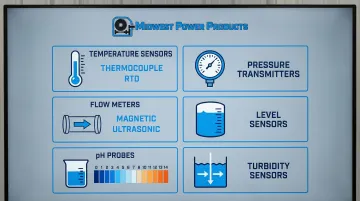
Common sensor types:
- Temperature sensors (thermocouples, RTDs)
- Pressure transmitters
- Flow meters (magnetic, ultrasonic, turbine)
- Level sensors (ultrasonic, radar, capacitance)
- pH and conductivity probes
- Turbidity and clarity sensors
Selecting the right sensor requires balancing accuracy requirements, environmental conditions, maintenance accessibility, and process compatibility. These measurements form the foundation of effective process control.
Controllers (PLCs and DCS)
Controllers execute control algorithms and determine corrective actions based on sensor data. Programmable Logic Controllers (PLCs) handle discrete control tasks and smaller processes, while Distributed Control Systems manage complex continuous processes across multiple units.
Modern controllers feature touchscreen interfaces that reduce training time and provide intuitive access to system data. High-speed processors enable real-time response to process variations, maintaining tight control even during rapid disturbances.
Actuators and Final Control Elements
Once controllers determine the necessary adjustments, actuators physically implement those changes. These devices translate electrical signals into mechanical action that changes process conditions.
Common actuator types:
- Control valves regulating flow, pressure, or level
- Variable frequency drives adjusting motor speeds
- Dampers controlling airflow
- Pumps with variable output
- Heating and cooling elements
Actuator sizing and selection critically impact control system performance. Undersized actuators cannot provide adequate adjustment range, while oversized actuators may cause instability.
Best Practices for Implementing Process Control Systems
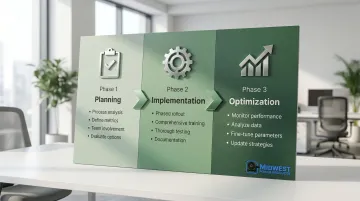
Planning Phase
Conduct thorough process analysis: Document current processes, identify control objectives, and establish baseline performance metrics. Understanding existing operations reveals improvement opportunities and prevents automation of inefficient processes.
Define success metrics: Establish measurable targets for efficiency gains, quality improvements, cost reductions, and payback periods. Clear metrics enable objective evaluation of system performance.
Involve operations and maintenance teams early: Operators and technicians provide valuable insights into process challenges and practical implementation constraints. Early involvement builds buy-in and ensures the system addresses real operational needs.
Evaluate system options: Compare PLC vs. DCS based on process complexity, assess SCADA requirements for distributed operations, and evaluate vendor support capabilities and long-term scalability.
Implementation Phase
Follow phased rollout: Implement systems incrementally rather than attempting facility-wide deployment simultaneously. Phased approaches reduce risk, enable learning from early installations, and maintain production during implementation.
Provide comprehensive training: Operators need hands-on training with actual equipment, not just classroom instruction. Training should cover normal operation, common troubleshooting, and emergency procedures.
Test thoroughly before full deployment: Simulate normal operations and failure scenarios to verify system responses. The Greater Cincinnati Water Works achieved a 98% detection rate across 2,015 simulated contamination scenarios through rigorous testing before full deployment.
Document all configurations: Maintain detailed records of control strategies, setpoints, alarm thresholds, and network configurations. Documentation enables troubleshooting and provides a reference for future modifications.
Optimization Phase
Monitor performance continuously: Track key performance indicators against baseline metrics to quantify improvements and identify underperforming areas.
Analyze data for improvement opportunities: Review historical data to identify patterns, optimize setpoints, and refine control strategies. Real-time feedback enables quick adjustments to maximize efficiency.
Fine-tune control parameters: PID controller tuning significantly impacts performance. Periodic retuning accounts for process changes and equipment wear.
Update strategies based on results: Process control is iterative:successful facilities continuously refine their approaches based on operational experience and performance data.
How to Choose the Right Process Control System
Assessment Criteria
Process complexity: Basic PLC control handles simple processes with few variables. Complex processes with multiple interacting variables need DCS capabilities.
Scale of operations: Integrated PLC systems work well for small facilities. Large operations need distributed control architectures.
Required precision: Tight-tolerance processes demand high-resolution sensors and advanced algorithms. Less critical applications can use simpler, cost-effective systems.
Integration needs: Check compatibility with existing equipment, SCADA systems, and enterprise software—open protocols like OPC-UA enable seamless integration.
Budget constraints: Balance upfront capital costs against long-term operational savings from improved efficiency and reduced labor.
Once you've assessed your needs, compare system types to find the best match for your operation.
System Comparison
PLC vs. DCS:
- PLCs excel at discrete control, smaller processes, and applications requiring rugged reliability
- DCS provides superior performance for continuous processes, large-scale operations, and applications requiring advanced control strategies
- Hybrid approaches combine PLC discrete control with DCS continuous control
SCADA considerations:
- Essential for geographically distributed operations
- Provides centralized monitoring and control across multiple sites
- Requires robust communication infrastructure and cybersecurity measures
Vendor evaluation:
- Assess technical support availability and response times
- Evaluate upgrade paths and long-term product support
- Consider local service capabilities for rapid response
- Review customer references from similar applications
After comparing systems and evaluating vendors, follow a structured framework to finalize your decision.
Decision Framework
- Document requirements: List all process variables requiring control, desired precision levels, and integration requirements
- Evaluate system capabilities: Match vendor offerings against requirements, identifying gaps and compromises
- Calculate total cost of ownership: Include hardware, software, installation, training, and ongoing maintenance costs
- Assess implementation risk: Consider vendor experience (companies like Softrol Systems bring 35+ years of automation expertise), system complexity, and production impact during installation
- Develop implementation roadmap: Plan phased deployment with clear milestones and success criteria
Industry Applications: Process Control in Textile Services
Laundry and Textile Processing
Industrial laundry operations depend on precise process control to deliver consistent quality while maximizing efficiency.
Process control systems manage wash temperature, chemical dispensing, water levels, cycle timing, and drying parameters to ensure uniform results across thousands of pounds processed daily.
Key control parameters:
- Wash temperature maintenance within ±2°F
- Chemical injection based on load weight and soil level
- Water flow rates for proper dilution
- Cycle timing for different fabric types
- Dryer temperature and moisture content monitoring
Automated systems reduce the variability inherent in manual operations, where operator attention, experience, and judgment affect outcomes.
Softrol Systems Example
Softrol provides comprehensive automation solutions for industrial laundry operations, showing how integrated process control systems transform textile processing efficiency.
MicroPulse Controls: These wash aisle controllers enable single-operator management of entire processing lines. They automatically transfer both goods and critical processing data between machines, ensuring each load receives appropriate treatment.
Controllers coordinate washers, dryers, and conveyors, maintaining optimal flow while documenting every processing step.
Catalyst Chemical Systems: Flow meter-based injection technology provides volumetric chemical dispensing with water flush verification. Real-time monitoring tracks delivery performance, generating alarms for failures and providing comprehensive operational feedback. This precise control reduces chemical consumption while maintaining consistent quality.
LOIS Management Software: The Laundry Operation Information System provides 24/7 remote access to critical plant performance data from any device. Real-time alerts notify managers of issues immediately, enabling rapid response. Equipment monitoring tracks performance, maintenance schedules, and identifies optimization opportunities through comprehensive data analysis.
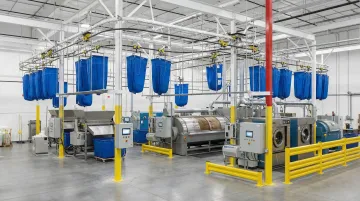
Automated Material Handling: Complementing the wash and chemical systems, rail platforms with distributed controls manage material flow from soil sorting through washing and finishing.
These systems handle throughput up to 13,500 lbs/hr, automatically accepting slings from sort systems, buffering for optimal wash loading, and interfacing with continuous batch washers for automatic sequencing.
ROI in Textile Services
These integrated control solutions deliver measurable returns across textile processing operations:
Efficiency improvements:
- 35% increase in Pounds Per Operator Hour documented at Faultless Linen
- Processing capacity up to 3,800 garments per hour through automated sorting
- Single operators managing operations previously requiring multiple staff
Cost savings:
- 77% reduction in sorting labor at Mission Linen
- Two-year payback periods on automation investments
- Reduced chemical consumption through precise flow-based dispensing
- Lower energy costs from optimized drying cycles
Quality improvements:
- Consistent wash results regardless of operator experience
- Automated tracking eliminates lost items
- Reduced customer complaints from uniform quality
- Complete documentation for troubleshooting quality issues
Frequently Asked Questions
What is a process control system?
A process control system is an integrated network of sensors, controllers, and actuators that automatically monitors and adjusts industrial processes in real-time. It maintains optimal operating conditions and ensures consistent product quality by measuring process variables and making instant corrections when deviations occur.
What is the difference between PCS and DCS?
PCS (Process Control System) is the broad term for all automated control systems. DCS (Distributed Control System) is a specific type that distributes control functions across multiple processors rather than using a single central controller, providing enhanced reliability and scalability.
What are the three types of process control?
The three main types are feedback control (closed-loop), which continuously measures and adjusts operations; feedforward control (predictive), which anticipates disturbances before they occur; and open-loop control (preset), which operates on predetermined instructions without feedback.
What are the 4 elements of process control?
The four essential elements are sensors (measuring process variables), controllers (making decisions based on measurements), actuators (physically adjusting the process), and the process itself (what's being controlled).
How do I choose the right process control system for my facility?
Assess your process complexity, operation scale, and precision requirements. Simple processes may need only basic PLC control, while complex operations require DCS capabilities. Evaluate integration needs with existing systems, vendor support quality, and scalability for future growth.
What are common mistakes when implementing process control systems?
Common pitfalls include inadequate planning without clear objectives, insufficient operator training, poor integration with existing equipment, and neglecting ongoing optimization. Successful implementations require thorough process analysis, phased rollouts, and commitment to continuous improvement.