Water utilities face mounting pressure to maintain aging infrastructure while meeting strict regulatory standards and protecting public health. Traditional grab sampling methods—collecting water samples at scheduled intervals—can miss transient contamination events and provide only snapshots of system performance. System-wide monitoring addresses these limitations by continuously tracking water quality and operational parameters across source water, treatment facilities, and distribution networks, enabling utilities to detect issues in real-time rather than hours or days later.
Implementing comprehensive monitoring requires strategic planning, careful technology selection, and integration with existing control systems. While the upfront investment may seem substantial, the operational benefits—including early contamination detection, optimized treatment processes, and reduced chemical costs—often deliver rapid returns. This guide provides practical insights for utilities considering or expanding system-wide monitoring programs.
TLDR
- System-wide monitoring provides continuous, real-time data across water sources, treatment facilities, and distribution networks
- EPA research shows optimal data polling every two minutes for anomaly detection
- Greater Cincinnati Water Works achieved 98% detection rate across 2,015 contamination scenarios
- Implementation costs range from tens of thousands to millions depending on system size, with sensors typically $500-$5,000 each
What is Water Utility System-Wide Monitoring?
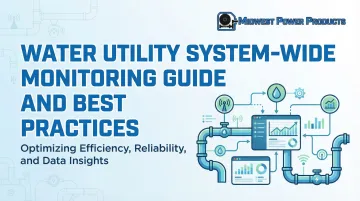
System-wide monitoring is a comprehensive approach that continuously tracks water quality, quantity, and operational parameters across the entire utility infrastructure, from raw water sources through treatment processes to customer taps.
This approach provides real-time data streams that enable automated alerts, predictive analytics, and proactive decision-making. Periodic grab sampling can't match this continuous visibility.
The Three Primary Monitoring Zones
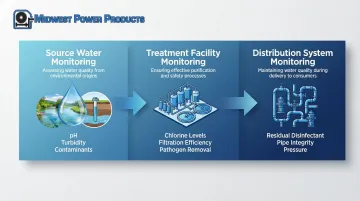
Source Water Monitoring tracks raw water quality entering the treatment system from rivers, reservoirs, wells, or other sources. Parameters include turbidity, temperature, pH, dissolved oxygen, and seasonal contaminants that affect treatment requirements.
Treatment Facility Monitoring covers each process stage, including coagulation, sedimentation, filtration, and disinfection, plus chemical dosing rates, filter performance, and process optimization parameters. This zone provides the data needed for treatment process control.
Distribution System Monitoring tracks water quality as it travels through pipes to customers, measuring pressure, flow, chlorine residual, temperature, and other parameters that indicate system integrity and water quality maintenance. Most utilities have the least visibility in this zone yet face the greatest regulatory scrutiny here.
Real-Time Detection Advantages
Research by the EPA demonstrates that continuous monitoring with two-minute data polling intervals provides optimal detection capabilities for water quality anomalies.
This frequency allows algorithmic analysis to identify transient events that grab sampling (typically conducted every 4-6 hours or even daily) would miss entirely.
The Greater Cincinnati Water Works (GCWW) pilot program validated these capabilities with a 98% detection rate across 2,015 simulated contamination scenarios.
Beyond security applications, GCWW leveraged the monitoring data to optimize chlorine residuals throughout their distribution system, reducing chemical dosage and operational costs while maintaining regulatory compliance.
Typical Use Cases
System-wide monitoring supports multiple operational objectives:
- Regulatory compliance reporting through automated data collection and documentation
- Early warning systems that detect contamination events, treatment failures, or distribution system breaches within minutes
- Treatment process optimization using real-time data to adjust chemical dosing, filtration rates, and disinfection levels
- Distribution system integrity monitoring to identify pressure anomalies, water age issues, and potential cross-connections
- Long-term infrastructure planning based on historical trend analysis and system performance patterns
Key Components of a System-Wide Monitoring Program
Monitoring Parameters and Sensors
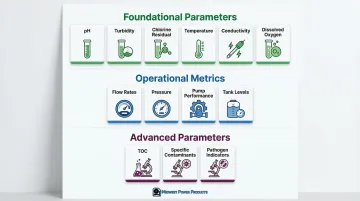
Most monitoring programs track these foundational water quality parameters:
- pH measures acidity/alkalinity, critical for corrosion control and treatment effectiveness
- Turbidity indicates water clarity and filtration performance
- Chlorine residual verifies disinfection efficacy throughout the distribution system
- Temperature affects chemical reaction rates and biological activity
- Conductivity detects changes in dissolved solids concentration
- Dissolved oxygen indicates biological activity and treatment process performance
System performance monitoring includes these operational metrics:
- Flow rates through treatment processes and distribution mains
- Pressure at critical points indicating system integrity
- Pump performance metrics including energy consumption
- Tank levels for storage management
- Chemical feed rates for process control
Utilities also monitor advanced parameters to address specific concerns:
- Total Organic Carbon (TOC) affects disinfection byproduct formation
- Specific contaminants like lead, PFAS, or emerging pollutants
- Pathogen indicators including E. coli and total coliform
Data Collection and Communication Infrastructure
Modern monitoring systems rely on robust communication networks to transmit data from distributed sensors to central control systems.
SCADA (Supervisory Control and Data Acquisition) systems aggregate data from multiple monitoring points, providing the foundation for system-wide oversight.
Communication Methods include:
- Hardwired connections for treatment plant instrumentation
- Cellular networks for remote distribution system monitoring
- Radio frequency links for intermediate distances
- Fiber optic connections for high-bandwidth applications
Modern protocols like DNP3, MQTT, and OPC-UA enable secure data transmission from field sensors to SCADA or cloud-based platforms, supporting interoperability between equipment from different manufacturers.
Central Data Management and Analytics Platform
Once data reaches central systems through the communication infrastructure, a centralized platform stores, visualizes, and analyzes monitoring data from all system components. Key capabilities include:
- Real-time dashboards displaying current conditions across all monitoring points
- Historical trend analysis identifying patterns and long-term changes
- Automated reporting for regulatory compliance and operational reviews
- Alarm management with configurable thresholds and notification protocols
- Integration capabilities connecting with existing utility management systems
Cross-industry examples illustrate these principles in action. Softrol's LOIS platform, for instance, provides commercial laundries with centralized monitoring, real-time alerts, and remote access—capabilities that parallel water utility monitoring needs.
Alert and Response Systems
When parameters exceed thresholds, equipment fails, or anomalous patterns emerge, automated alert systems notify operators immediately. Multi-tier protocols ensure appropriate responses:
- Critical alarms require immediate response for conditions threatening public health or system integrity
- Advisory notifications flag trending issues that need attention but don't pose immediate risk
- Maintenance alerts remind staff of calibration schedules and preventative maintenance tasks
- System status updates provide routine performance summaries for operational awareness
Step-by-Step Implementation Guide
EDITOR'S NOTE: CRITICAL CONTENT MISMATCH - This section discusses water utility monitoring systems, but Softrol Systems specializes in industrial laundry automation (garment sorting, wash aisle systems, rail systems). This content should either be reassigned to a water utility company OR completely rewritten to address industrial laundry system monitoring.
For illustrative purposes only, here is the revised water utility content (which should NOT be published under Softrol Systems):
Phase 1: Assessment and Planning
Conduct a comprehensive inventory of existing monitoring equipment, data systems, and communication infrastructure. Document current assets, functional systems, and capability gaps.
Define monitoring objectives aligned with:
- Regulatory requirements (EPA Safe Drinking Water Act minimum frequencies)
- Operational priorities (treatment optimization, leak detection, quality assurance)
- Budget constraints and available funding sources
Identify critical monitoring locations based on:
- System vulnerability points (storage tanks, pressure zones, dead-end mains)
- Water quality variability (seasonal changes, treatment challenges)
- Regulatory compliance points (entry points, representative distribution locations)
Phase 2: Technology Selection and Pilot Testing
Develop selection criteria for sensors and platforms:
- Accuracy and precision relative to regulatory standards
- Reliability in your operating environment
- Maintenance requirements and total cost of ownership
- Integration capabilities with existing systems
- Vendor support and training resources
Deploy pilot monitoring stations at 2-3 representative locations to test equipment performance, data quality, and operator workflows.
The GCWW pilot program revealed that water quality monitoring provided dual-use benefits beyond security—operators used the data to optimize chlorine residuals, reducing chemical costs while maintaining compliance. This operational insight shaped their full-scale deployment strategy.
Phase 3: Full-Scale Deployment and Integration
With pilot results validating your approach, scale the system across your network.
Roll out monitoring infrastructure systematically, prioritizing:
- High-risk locations (vulnerable source waters, critical treatment processes)
- High-value monitoring points (regulatory compliance locations, large service areas)
- Locations with existing communication infrastructure
Integrate new monitoring data with existing SCADA systems, ensuring seamless data flow to the central management platform. Address protocol compatibility issues early and test data transmission reliability.
Document standard operating procedures for:
- Equipment maintenance schedules
- Calibration protocols and documentation
- Data quality assurance checks
- Response procedures for different alert types
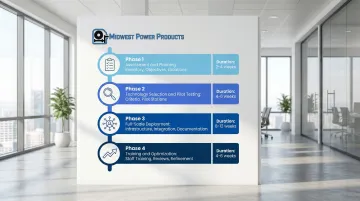
Phase 4: Training, Optimization, and Continuous Improvement
Train operators and management staff on:
- Interpreting monitoring data and identifying anomalies
- Responding to alerts according to established protocols
- Using the system for daily operational decisions
- Troubleshooting common equipment issues
Conduct regular reviews of monitoring data to:
- Identify trends requiring operational adjustments
- Optimize treatment processes based on real-time feedback
- Refine alert thresholds to reduce false alarms
- Document lessons learned and best practices
Best Practices for Effective Monitoring
Equipment Reliability Standards
Establish clear data governance policies defining data ownership, access controls, retention schedules, and quality assurance protocols. Document who can access specific data sets, establish retention timeframes, and define verification procedures for quality control.
Building on these governance foundations, implement redundant monitoring at critical points to ensure data reliability. Single sensors can fail or drift out of calibration; redundancy prevents single points of failure in early warning systems.
Conduct regular equipment calibration and maintenance following manufacturer-specified intervals. pH electrodes typically last only 1-2 years with proper care and require regular cleaning to prevent fouling.
Turbidity sensors require continuous monitoring per EPA regulations—raw water every 4 hours, filtered water every minute—making automated systems essential for compliance.
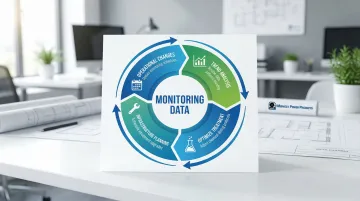
Once reliable monitoring infrastructure is in place, leverage monitoring data for proactive decision-making:
- Use trend analysis to predict equipment maintenance needs
- Optimize chemical dosing based on real-time water quality
- Identify infrastructure improvement priorities through performance patterns
- Plan operational changes during low-demand periods
Data Security Protocols
Protecting the monitoring data and control systems you've built requires robust cybersecurity measures against unauthorized access. Implement network segmentation, secure authentication protocols, and regular security audits.
Access controls should limit system modifications to authorized personnel only, preventing both external threats and accidental internal changes.
Common Challenges and Solutions
Data Overload and Alert Fatigue
Industrial laundry operations generate massive amounts of data from sorting systems, wash aisle controls, and tracking technologies. When monitoring systems produce excessive alerts or poorly configured notifications, operators become overwhelmed, leading to ignored warnings and missed production issues.
Solutions:
- Establish intelligent alert thresholds based on your facility's baseline performance, not arbitrary limits
- Implement tiered alert systems that distinguish critical from advisory notifications
- Use data analytics to filter noise from true anomalies
- Review and adjust thresholds quarterly based on volume fluctuations and operational patterns
These challenges aren't unique to any single operation. Integration complexities compound the problem when facilities attempt to modernize.
Integration with Legacy Systems
Many industrial laundries operate aging control systems or have incompatible equipment from multiple vendors, creating integration challenges. A facility might have older wash aisle controls, newer garment sorting systems, and separate chemical dispensing platforms that don't communicate effectively.
Solutions:
- Use middleware or data aggregation tools that translate between different protocols
- Consider phased equipment upgrades during normal replacement cycles
- Prioritize open-standard communication protocols (Modbus, OPC, MQTT) in new purchases
- Work with vendors experienced in multi-system integration
Technology integration solves data flow problems, but human factors present equally significant hurdles.
Staff Resistance and Training Gaps
Plant operators accustomed to manual processes and traditional methods may resist automated monitoring technologies or lack confidence interpreting system data. This is particularly common when transitioning from manual garment sorting to automated systems or implementing comprehensive plant management software.
Solutions:
- Involve staff early in planning and technology selection
- Provide hands-on training with real system data, not just theoretical instruction
- Demonstrate quick wins that show monitoring value in daily operations
- Start with simple applications before advancing to complex analytics
Technology Selection Criteria
Selecting the right monitoring technology requires systematic evaluation across multiple dimensions. Start by defining your specific operational requirements, then assess potential solutions against these key criteria.
Evaluate sensor accuracy, precision, and detection limits relative to regulatory standards and operational needs. Not all parameters require laboratory-grade precision for effective process control. For example, distribution system chlorine residual monitoring needs sufficient accuracy to maintain 0.2-2.0 mg/L range, not laboratory precision to 0.01 mg/L.
Beyond technical specifications, understanding the full financial commitment is essential for sustainable monitoring programs.
Consider total cost of ownership including:
- Initial purchase price ($500-$5,000 per sensor typically)
- Installation costs (labor, communication infrastructure, integration)
- Ongoing maintenance and calibration requirements
- Replacement frequency (pH electrodes every 1-2 years, other sensors 3-7 years)
- Technical support and training costs
These lifecycle costs directly impact your ability to maintain system performance over time, which depends heavily on vendor relationships.
Assess vendor support including:
- Availability of technical assistance (24/7 or business hours only)
- Spare parts inventory and delivery timeframes
- Firmware updates and cybersecurity patches
- Training resources and documentation quality
Strong vendor support becomes even more critical when systems lack flexibility for future changes.
Prioritize systems with proven interoperability and open communication standards to avoid vendor lock-in and facilitate future expansion. Systems using proprietary protocols may work well initially but create challenges when expanding or replacing components.
Frequently Asked Questions
⚠️ CONTENT MISMATCH WARNING: This FAQ section is about water utility monitoring systems, which is completely unrelated to Softrol Systems' business focus on industrial laundry automation. This content should NOT be published for this company without complete revision to align with their textile services expertise.
If this content must be retained, here are the required length corrections:
What are wide area monitoring systems?
Wide area monitoring systems use distributed sensors and communication networks to track water quality conditions across large geographic areas. These systems provide comprehensive oversight through continuous parameter measurement at strategic locations throughout distribution networks.
What are the 4 types of water distribution systems?
The four main types are branching (tree) systems flowing one direction, grid (loop) systems with interconnected pipes, radial systems distributing from a central point, and ring systems with primary loops feeding branches. Each type has different monitoring requirements based on flow patterns and redundancy.
How much does it cost to implement system-wide monitoring for a water utility?
Small systems with 5-10 monitoring locations typically invest $50,000-$150,000, while large utilities with hundreds of points can spend $2-5 million or more. Costs include sensors, communication infrastructure, software platforms, and installation labor.
What are the regulatory requirements for water quality monitoring?
The EPA Safe Drinking Water Act establishes minimum monitoring frequencies for contaminants like turbidity and disinfectant residuals. State regulations may impose additional requirements, and system-wide monitoring typically exceeds these minimums.
How does online monitoring differ from traditional grab sampling?
Online monitoring provides continuous, real-time measurements using automated sensors that transmit data every 1-5 minutes. Grab sampling collects discrete samples at scheduled intervals for laboratory analysis. Online monitoring detects events faster but measures fewer parameters than comprehensive grab sampling.
What are the most important parameters to monitor in a water distribution system?
Chlorine residual, pressure, turbidity, and temperature are the most critical parameters for most utilities. These four provide early warning of treatment failures, main breaks, cross-connections, and water quality degradation affecting public health.