Introduction: Why Production System Optimization Matters for Manufacturers
Manufacturers today face unprecedented pressures that threaten their survival. 79% of U.S. manufacturing executives cite skilled labor shortages as their primary barrier to growth, with nearly 1.9 million jobs projected to remain unfilled through 2033.
Rising energy costs compound the challenge. Industrial users consumed 31.19 quadrillion Btu of energy in 2024, representing 33.3% of total U.S. consumption. Combined with demand volatility, these pressures make production system optimization essential for survival.
Production system optimization represents a holistic approach to improving efficiency, quality, and output across all manufacturing operations, from raw materials to finished goods.
System optimization addresses the interconnected elements of manufacturing (people, processes, equipment, materials, and methods) as a unified whole. This distinguishes it from isolated process improvements that tackle only individual bottlenecks.
This article delivers proven strategies that manufacturers use to increase throughput by 15-30%, reduce costs by up to 28%, and improve quality metrics substantially. You'll learn practical implementation steps, discover how technology accelerates results, and understand how to overcome common challenges that derail optimization efforts.
TLDR: Key Takeaways
- Production system optimization cuts costs, improves efficiency, and boosts quality across manufacturing operations
- Seven proven strategies deliver results: automation, lean manufacturing, predictive maintenance, workforce optimization, quality control, data analytics, and supply chain integration
- Implementation success requires baseline assessment, prioritization, phased rollout, and continuous measurement
- Modern technologies like IoT sensors, automation systems, and data platforms accelerate results
Understanding Production System Optimization: Foundations
Manufacturers lose an average of 23% of productive time to unplanned downtime and inefficiencies, according to Plant Engineering research. These losses stem from disconnected systems where improvements in one area create bottlenecks elsewhere.
Production system optimization addresses this challenge by analyzing and improving the interconnected elements of manufacturing: people, processes, equipment, materials, and methods. This holistic approach differs fundamentally from process optimization, which targets individual workflow improvements.
Process optimization vs. system optimization:
- Process optimization improves a specific step (such as reducing cycle time on one CNC machine)
- System optimization addresses the entire production ecosystem, recognizing that improving non-bottleneck resources doesn't increase overall throughput
The 5 M's Framework
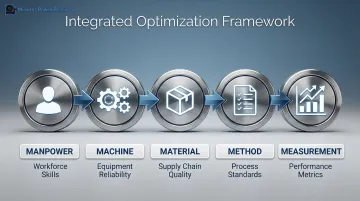
The 5 M's of manufacturing provide a structured approach to optimization:
Man (Manpower): Operator skill, training, decision-making capabilities, and workforce planning
Machine: Equipment, tools, technology, and maintenance strategies that ensure reliable operation
Material: Raw components, consumables, inventory management, and supply chain coordination
Method: Standard operating procedures, process documentation, and workflow design
Measurement: Data collection systems, key performance indicators, and analytics capabilities
Effective optimization addresses each element systematically rather than in isolation.
Softrol's approach to textile services operations demonstrates this integration. The system combines real-time labor tracking through PulseNet, equipment monitoring via LOIS Rail software, automated material handling through rail systems, standardized chemical dispensing methods, and comprehensive data collection across all operations—creating a unified optimization strategy rather than isolated improvements.
Key Benefits of Production System Optimization
Increased Throughput and Capacity
Eliminating bottlenecks delivers substantial throughput gains without capital equipment investment. Research shows that applying Theory of Constraints and bottleneck analysis can increase throughput by 30%. Single-Minute Exchange of Die (SMED) implementations have reduced setup times by 75% on bottleneck machines, directly increasing line availability.
Mission Linen achieved 3,500 garments per hour processing capacity after implementing Softrol's automated sorting system, showing how targeted automation eliminates production constraints.
Reduced Operational Costs
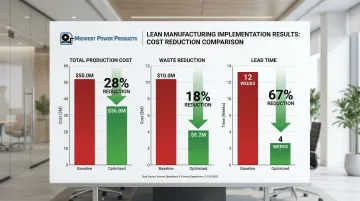
These throughput improvements translate directly into cost savings. A packaging plant study implementing Value Stream Mapping, 5S, and Kaizen reported:
- 28% reduction in total production cost
- 18% reduction in waste
- Significant lead time improvements
These savings come from reduced waste, lower energy consumption, improved labor efficiency, and decreased maintenance costs.
Improved Product Quality and Consistency
Beyond cost savings, optimization drives measurable quality improvements. Standardized processes and integrated controls reduce defects substantially.
Statistical Process Control (SPC) implementation increased First Pass Yield from 72% to 91% in documented cases, representing a 26% improvement in quality metrics. Higher yields mean reduced rework, lower scrap rates, and fewer customer returns.
Enhanced Workforce Productivity and Satisfaction
Optimized workflows reduce frustration, improve safety, and allow workers to focus on value-adding activities rather than firefighting. Softrol customers have achieved 77% labor reduction in sorting operations while simultaneously improving accuracy and quality, showing how automation handles repetitive tasks while freeing skilled workers for higher-value work.
Greater Agility and Responsiveness
Optimized systems adapt faster to demand changes, product variations, and supply disruptions. SMED implementations reducing setup times by 45% or more enable quick product switches, responding to market demands without sacrificing efficiency.
7 Proven Production Optimization Strategies
Strategy 1: Process Automation and Control Systems
Automating repetitive tasks and implementing integrated control systems improves consistency while freeing labor for higher-value work. Robotic machining solutions deliver payback periods as short as 3 months with ROI exceeding 1,200% over 18 months.
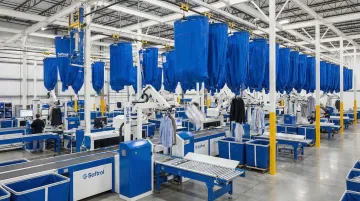
Softrol's AutoPulse Wash Aisle System enables reliable processing with a single operator managing entire wash aisles from central control centers.
At Aramark's Sacramento facility, automated garment sorting processes 40,000 garments per day at 3,800 garments per hour while reducing workforce requirements by 70%—from 10 employees to just 2 operators.
While automation handles the mechanical aspects of optimization, complementary methodologies address process flow and waste elimination.
Strategy 2: Lean Manufacturing Principles
Lean concepts—value stream mapping, continuous flow, pull systems, and waste elimination—remain highly effective for removing waste and improving flow.
Key lean tools:
- Value Stream Mapping identifies waste and bottlenecks across entire processes
- 5S creates organized, efficient workspaces
- Kaizen drives continuous incremental improvements
- Pull systems reduce inventory and improve flow
A packaging plant case study demonstrated 28% production cost reduction and 18% waste reduction through comprehensive lean implementation.
Beyond process optimization, equipment reliability directly impacts production consistency.
Strategy 3: Preventive and Predictive Maintenance
Shifting from reactive to proactive maintenance drastically reduces downtime costs. AI-driven predictive maintenance reduces unplanned downtime by up to 50% and maintenance costs by approximately 25%.
In one automotive manufacturing case, implementing real-time monitoring and anomaly detection reduced unplanned downtime by 78%. Condition monitoring through IoT sensors tracks vibration, temperature, and power draw to predict equipment failures before they occur.
While technology optimizes equipment performance, human capital remains equally critical to production efficiency.
Strategy 4: Workforce Optimization and Cross-Training
Strategic workforce planning, skills development, and cross-training create flexibility and reduce bottlenecks caused by labor constraints. Cross-trained operators can shift between workstations as demand fluctuates, preventing bottlenecks from labor shortages.
Softrol's PulseNet Production System provides real-time labor tracking and productivity management, helping facilities increase Pounds Per Operator Hour (PPOH).
At Faultless Linen, this system contributed to a 35% increase in PPOH within four months.
Strategy 5: Integrated Quality Management
Embedding quality checks throughout production rather than only at the end catches issues earlier and reduces waste. Statistical Process Control (SPC) uses statistical methods to monitor process behavior against control limits, detecting trends like tool wear before they result in defective parts.
This approach increases process capability and First Pass Yield, directly reducing the cost of poor quality. Softrol's systems provide real-time alerts when critical parameters are exceeded, enabling immediate corrective action.
These quality management systems generate valuable performance data, which leads to the final optimization strategy.
Strategy 6: Data-Driven Decision Making
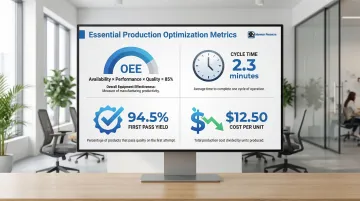
Collecting and analyzing production data reveals hidden improvement opportunities and enables fact-based decisions. Key metrics include:
Overall Equipment Effectiveness (OEE):
- Formula: Availability × Performance × Quality
- Identifies hidden capacity losses
Cycle Time: Time required to complete one operation cycle
First Pass Yield: Percentage of products meeting quality standards without rework
Manufacturing Cost Per Unit: Total cost to produce a single unit
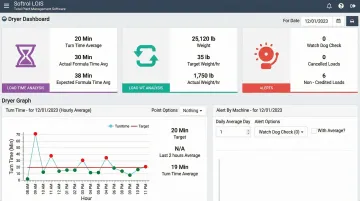
Softrol's LOIS (Laundry Operation Information System) provides 24/7 access to critical plant performance data from any device, sending real-time alerts directly to email addresses when issues arise. This visibility enables managers to identify bottlenecks quickly and make informed decisions about labor, equipment, or goods flow adjustments.
Common Challenges and How to Overcome Them
Challenge 1: Resistance to Change
Operators and managers resist change when they fear job loss, increased workload, or unfamiliar technology.
Tactics to build buy-in:
- Involve frontline workers in planning and design decisions
- Communicate benefits clearly, focusing on how optimization makes their jobs easier
- Provide comprehensive training before implementation
- Celebrate early wins publicly to demonstrate value
- Address concerns transparently and honestly
Once you've addressed workforce concerns, the next hurdle is financial justification.
Challenge 2: Justifying Upfront Investment
When ROI remains unclear, securing funding for optimization initiatives becomes difficult.
Framework for building business cases:
- Baseline current costs across labor, energy, waste, and downtime
- Calculate potential savings using industry benchmarks (28% cost reduction and 50% downtime reduction)
- Phase investments to prove value incrementally
- Start with high-impact, lower-cost improvements that deliver quick wins
- Use early successes to fund larger initiatives
The numbers support investment: automation payback periods average 3-6 months, with typical ROI exceeding 1,200% over 18 months. When documented with baseline data, the financial case becomes compelling.
Even with funding secured, technical barriers can derail implementation.
Challenge 3: Data Silos and Integration Complexity
Disconnected systems prevent comprehensive visibility and optimization.
Integration strategies:
- Prioritize integration efforts based on impact potential
- Select platforms designed for interoperability (like Softrol's LOIS, which works seamlessly with any Softrol product)
- Start with critical data flows between bottleneck operations
- Use modular control components that simplify integration
- Implement cloud-based platforms that provide single access points for all plant data
Implementing Production Optimization: A Practical Roadmap
Step 1: Conduct Baseline Assessment
Measure current performance across key metrics before making changes.
Critical metrics to baseline:
- Overall Equipment Effectiveness (OEE)
- Cycle times for each operation
- First Pass Yield and defect rates
- Downtime by category (planned, unplanned, changeover)
- Labor efficiency (units per operator hour)
- Energy consumption per unit
Gather data through direct observation, equipment logs, and frontline input—combining quantitative metrics with qualitative operator feedback to identify the biggest pain points.
Step 2: Prioritize Improvement Opportunities
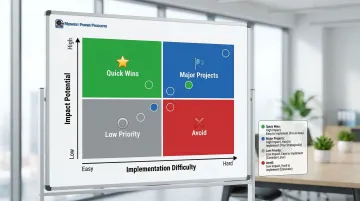
Evaluate opportunities based on three criteria:
Impact potential: How much improvement is possible? (Industry data shows typical improvements of 30% throughput increase, 28% cost reduction, and 50% downtime reduction are achievable)
Implementation difficulty: What resources, time, and disruption are required?
Resource requirements: What investment is needed?
Focus first on high-impact, achievable wins that demonstrate value quickly. Addressing bottleneck operations delivers disproportionate returns—as Goldratt's Theory of Constraints demonstrates, system throughput is always limited by its weakest link.
Once you've identified your priorities, the next critical decision is how to roll them out.
Step 3: Develop Phased Implementation Plan
Pilot changes in controlled areas, measure results, refine the approach, then scale successful initiatives.
Phased approach benefits:
- Minimizes operational disruption
- Allows learning and adjustment before full-scale rollout
- Demonstrates value to build support for broader implementation
- Reduces financial risk
This strategy works in practice. Mission Linen's implementation demonstrates the approach: Softrol designed a mezzanine allowing the new SoftSort System to be installed without interfering with existing operations, then removed original equipment after the new system was operational.
Step 4: Invest in Enabling Technology
Technology serves as the enabler that accelerates optimization results by providing real-time visibility, precise control, and seamless integration across operations.
Key technology categories:
- Real-time monitoring systems (IoT sensors, machine connectivity)
- Automation platforms (material handling, process controls)
- Management software (data collection, analysis, reporting)
- Integrated control solutions (connecting previously siloed systems)
Softrol's Total Plant Management Software provides a single entry point for accessing advanced information about plant operations, collecting data from multiple production points to identify bottlenecks quickly.
Step 5: Establish Continuous Improvement Culture
Optimization isn't a one-time project—it requires building systems and habits that sustain improvement over time.
Continuous improvement elements:
- Daily production reviews with frontline teams
- Weekly performance metric analysis
- Monthly improvement project reviews
- Quarterly strategic planning sessions
- Recognition programs for improvement suggestions
- Cross-functional improvement teams
Technology Enablers for Modern Production Optimization
Real-Time Monitoring and Data Collection Systems
IoT sensors, machine connectivity, and data platforms give manufacturers immediate visibility into production issues as they occur.
Softrol's LOIS system offers 24/7 access to critical plant performance data from smartphones, tablets, and PCs, sending real-time alerts directly to email addresses when critical thresholds are exceeded.
The system monitors operator work, machine utilization, and plant throughput continuously, enabling managers to respond to issues in real-time rather than discovering problems hours later through end-of-shift reports.
Integrated Automation and Control Solutions
Real-time monitoring becomes even more powerful when integrated with automated control systems that can respond instantly to changing conditions.
Comprehensive automation platforms connect material handling, processing controls, and management software to eliminate manual handoffs and synchronize operations. Softrol's Total Plant Management integrates rail systems, wash aisle controls, chemical dispensing, and productivity tracking into a unified platform.
At Crown Health Care Laundry Services, Softrol's rail system features 13,500 lbs/hr continuous throughput design with automated weight registration, sling change-out, and seamless integration with tunnel washers through DataFusion technology.
Advanced Analytics and AI
Building on the foundation of automated systems and real-time data, advanced analytics takes optimization to the next level by predicting future needs before they become problems.
Manufacturers use predictive analytics to forecast maintenance needs, optimize scheduling, and identify patterns humans might miss. McKinsey estimates that predictive maintenance in manufacturing could generate between $260 billion and $460 billion in value globally by 2030.
AI models analyzing sensor data predict equipment failures before they occur, enabling maintenance during planned downtime rather than responding to unexpected breakdowns.
Frequently Asked Questions
How to optimize production processes?
Start by collecting data on OEE, cycle times, and quality rates to identify bottlenecks. Prioritize improvements based on impact potential, focusing first on bottleneck operations, then implement changes systematically while measuring results continuously.
What are the 5 M's of manufacturing?
The 5 M's are the core production inputs: Man (workforce), Machine (equipment), Material (raw inputs), Method (processes), and Measurement (KPIs and analytics). Optimizing each element improves overall system performance.
What are the four types of production systems?
Job shop (custom, low-volume), batch (grouped production with moderate volume), mass production (high-volume standardized products), and continuous (24/7 flow processes). Each type requires different optimization strategies based on volume and product variety.
What metrics should I track to measure optimization success?
Track Overall Equipment Effectiveness (OEE = Availability × Performance × Quality) as the primary metric. Also monitor cycle time, First Pass Yield, categorized downtime, and cost per unit for comprehensive optimization visibility.
How long does it take to see results from production optimization efforts?
Quick wins appear within weeks, while comprehensive programs show significant ROI in 6-12 months. Automation projects can achieve payback in 3-6 months with proper planning, and a phased approach delivers early successes.
Do I need to invest in expensive technology to optimize production?
No. Many gains come from process improvements, training, and lean principles requiring minimal investment. Technology should target bottleneck operations with high labor content or quality issues where automation delivers clear ROI.