
Real-time tracking changes how plants operate. Instead of manually searching for equipment or reacting after a breakdown, teams see exactly where assets are and how they're performing, right now. That means fewer labor hours wasted, less idle machinery, and maintenance scheduled before a failure shuts down a line.
This guide breaks down the top real-time asset tracking platforms available to US industrial operations in 2024, plus how to pick the right one for your facility.
TL;DR
- Real-time asset tracking combines GPS, RFID, BLE, or UWB hardware with software for continuous location tracking and condition monitoring
- The right platform depends on your asset type, facility environment, and ERP/CMMS integration needs
- This guide reviews five leading platforms: Samsara, Zebra Technologies, Tenna, Asset Panda, and Geotab
- Evaluate options on data accuracy, industrial durability, scalability, and total cost of ownership
Overview of Real-Time Asset Tracking in Industrial Operations
Real-time industrial asset tracking pairs hardware tags with a software platform that continuously reports where an asset is and what condition it's in. Unlike periodic audits or barcode scans done once a shift, these systems push live updates as equipment moves through a facility or fleet.
Common tag types include:
- GPS for outdoor, wide-area tracking
- RFID for low-cost, short-range identification
- BLE (Bluetooth Low Energy) for indoor proximity tracking
- UWB (Ultra-Wideband) for high-precision indoor positioning
The category is growing fast for a reason. Manufacturers are automating more of their operations, and tracking has become a baseline requirement for that automation. A MarketsandMarkets industry report values the US market at $1.2 billion in 2024, climbing toward $2.0 billion by 2029 - a clear signal that industrial buyers are investing heavily here.

Below, we cover the five platforms most commonly deployed across US industrial operations right now.
Top Real-Time Industrial Asset Tracking Solutions for 2024
We selected these platforms based on real-time data accuracy, industrial durability, integration capability, and verifiable customer track record.
Samsara
Samsara is a connected operations platform built around GPS tracking layered with AI-powered monitoring, originally for vehicle fleets but now extending into broader equipment tracking. It reports location data every second, giving continuous visibility rather than periodic pings.
What sets it apart:
- AI dashcams that flag drowsiness, distraction, tailgating, and forward-collision risk in real time
- Automated compliance tooling that reduces manual reporting overhead
- Unified cloud platform that scales from a handful of vehicles to thousands of assets
Samsara customers report strong results: Sunrun saw a 23% increase in vehicle utilization, and Maxim Crane Works saved $13 million through a predictive-maintenance program, per Samsara's equipment tracking page. These figures come from vendor-reported case studies rather than independent benchmarks.
| Connectivity | Pricing | Key Feature |
|---|---|---|
| 4G LTE cellular, Wi-Fi, optional satellite | Quote-based, tiered by fleet size | AI-driven safety and compliance automation |

Zebra Technologies
Zebra has spent decades building enterprise-grade RFID, barcode, and RTLS hardware for warehouse and industrial floors. It's the strongest option here for facilities that need rugged, multi-technology location infrastructure rather than a single tracking method.
Zebra's lineup spans UWB for precise indoor/outdoor positioning, WhereNet RTLS tags for hazardous environments, and a full range of RFID readers and antennas. Its ATR7000 overhead reader, for example, tracks tag positions across four to six reporting zones simultaneously. Software-wise, MotionWorks Enterprise converts all that raw location data into actionable asset visibility.

- Rugged hardware built for harsh plant floors, not office environments
- Broadest range of location technologies (RFID, UWB, BLE) under one vendor
- MotionWorks Enterprise software for turning data into utilization insights
| Connectivity | Pricing | Key Feature |
|---|---|---|
| RFID, barcode, Wi-Fi, Bluetooth | Quote-based | Industry-leading rugged RFID/barcode hardware for RTLS |
Tenna
Tenna was built specifically for construction and mixed industrial equipment fleets, and it shows. Instead of bolting maintenance on as an afterthought, work orders and preventive maintenance schedules are native to the platform.
Its tracking mix includes GPS trackers using cellular data, Bluetooth beacons for smaller tools, and QR-code labels scanned via smartphone. Once data comes in, it feeds directly into configurable maintenance schedules, automated alerts, and mechanic-routed service requests.
- GPS/Bluetooth/QR tracking unified in one client workspace
- Preventive maintenance schedules trigger automatically from usage data
- Service requests route straight to mechanics with full asset history attached
| Connectivity | Pricing | Key Feature |
|---|---|---|
| GPS, Bluetooth, barcode/QR | Quote-based | Built-in maintenance and work order integration |
Asset Panda
Asset Panda takes a different approach: highly configurable workflows rather than fixed tracking hardware. It's cloud-based, mobile-first, and works offline, which matters for field teams doing audits in areas with poor signal.
The platform captures GPS coordinates whenever an asset is scanned via barcode or QR code, and supports real-time check-in/check-out for shared equipment. It's less about always-on telematics and more about flexible lifecycle management.
- Fully configurable fields and workflows for tracking non-standard assets
- Offline mobile access for inspections and audits
- Free 7-day trial to test fit before committing
| Connectivity | Pricing | Key Feature |
|---|---|---|
| Cloud-based with mobile app access | Quote-based, 7-day free trial | Highly configurable workflows and check-in/check-out tracking |
Geotab
Geotab built its reputation on telematics, but its real advantage is openness. Rather than a closed ecosystem, Geotab runs a marketplace with 350+ solutions from 250+ partners, per Geotab's official marketplace page, spanning 15 software and hardware categories.
That openness matters if your plant already runs ERP, CMMS, or safety software you don't want to replace. Geotab's AI-driven Smart Sequence surfaces urgent events with video and context, while its web-based analytics deliver near-real-time asset location.
- Largest third-party integration marketplace among telematics vendors
- AI-driven analytics for prioritizing which events need human review
- Sold through a reseller network, so pricing varies by partner
| Connectivity | Pricing | Key Feature |
|---|---|---|
| Cellular | Quote-based, through reseller network | Marketplace with 350+ third-party integrations |
How We Chose the Best Real-Time Asset Tracking Solutions
Buyers often make the same mistakes: chasing the lowest sticker price while ignoring integration costs, or picking a technology without checking whether it actually works in their facility's radio environment (dense steel shelving kills RFID range fast).
We weighed each platform against factors that map directly to operational outcomes:
- Real-time data accuracy - determines how quickly you catch a misplaced asset or stalled process
- Industrial durability and certifications - hardware that survives dust, moisture, and drops without constant replacement
- Scalability - whether the system still works when you go from 50 assets to 5,000
- ERP/CMMS integration - avoids double data entry and keeps maintenance records in sync
- Client track record - verified case studies over marketing claims

Each of these ties back to the same goal: less downtime, lower labor costs, and equipment that's actually where your records say it is.
Conclusion
There's no single "best" asset tracking platform. The right choice depends on matching the technology, GPS, RFID, BLE, or a mix, to your specific facility layout, asset types, and existing software stack, not on brand recognition alone.
Before signing a multi-year contract, pilot-test any platform against your real operating conditions. Check how it performs at your actual scale and calculate the true total cost, hardware, subscriptions, and integration labor included.
Some specialized sectors need more than generic asset tracking. Textile services and industrial laundry operations, for instance, run rail-based garment sortation systems that generic GPS or RFID trackers weren't built to handle.
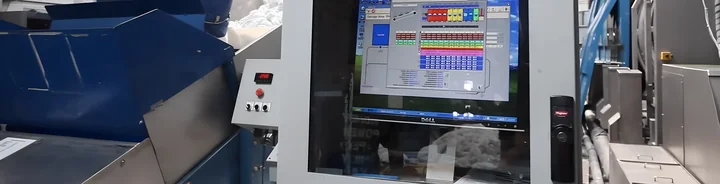
Softrol Systems' LOIS platform addresses this gap directly, providing real-time visualization and remote access to plant and rail system performance data. Its LOIS Rail module adds Pan-N-Zoom touchscreen visualization, letting operators view an entire monorail system to scale, zoom into individual components, and monitor system health and preventive maintenance in real time. If garment sortation is part of your operation, LOIS Rail is worth evaluating directly against your rail layout.
Frequently Asked Questions
What is the best asset tracking software?
It depends on your asset type and environment. Samsara suits fleet-heavy operations needing AI safety features, while Zebra fits facilities needing rugged, multi-technology RTLS hardware.
Which system is commonly used to track assets?
GPS, RFID, BLE, and barcode/QR systems are most common. Each suits different needs: GPS for wide outdoor areas, RFID and BLE for indoor precision, and barcodes for low-cost point scanning.
How much does a real-time industrial asset tracking system cost?
Costs combine hardware and subscription fees, and pricing varies widely by technology and scale. Many vendors, including Samsara and Geotab, bundle hardware costs into monthly per-asset subscriptions.
What is the difference between RTLS and asset tracking?
RTLS refers specifically to wireless systems providing continuous, near-real-time location within a defined space, per the US Department of Veterans Affairs. Asset tracking is the broader goal, which RTLS often supports.
How does real-time asset tracking improve ROI in industrial settings?
It reduces theft, cuts unplanned downtime, and improves utilization. One Samsara customer, MAVIN, reported a 25% reduction in equipment breakdowns and $16,000 in lease-cost savings.
Can real-time asset tracking integrate with existing ERP or plant management systems?
Most modern platforms offer APIs or pre-built integrations, and this should be a top evaluation criterion. Geotab, for example, supports 350+ third-party integrations through its Marketplace.