
The scale is hard to ignore. The EIA reported 140,491,981 AMI meters installed in 2024, covering 83.6% of all US electric meters. That's up roughly 10% from 2023 alone. Grid modernization isn't a future trend anymore - it's the default state of US utility infrastructure.
This guide breaks down how smart metering systems actually work, what components make them tick, and where they deliver real value, from residential bill management to industrial plants tracking every kilowatt and gallon.
TL;DR
- Smart meters automatically capture, transmit, and analyze energy data in near real-time
- Three core parts: measuring unit, communication unit, and analytics software
- Used in homes, commercial buildings, industrial plants, and utility grid operations
- Benefits include cost savings, outage detection, and demand management
- Challenges include security concerns and upfront installation costs
- Increasingly essential for industrial operations needing granular utility visibility
What Is a Smart Metering System?
A smart metering system is a digital setup that automatically collects, processes, and transmits consumption data for electricity, gas, or water. It replaces the old model: someone reading a dial once a month and mailing you a bill six weeks later.
That old model has a gap. Manual reads are infrequent, error-prone, and tell you nothing about when you used energy, only how much. Smart metering closes that gap with continuous, granular data.
Smart meters differ from similar-looking equipment in a few key ways:
- Basic digital meter: the classic spinning-dial version. No digital storage, no transmission.
- Smart meter: captures data automatically and sends it somewhere useful, without a human involved.
Even as facilities adopt broader IoT and automation platforms, smart metering stays relevant because it's the data source those platforms depend on. You can't optimize energy use in an automated plant without a meter feeding it real numbers.
AMR vs. AMI: The Two Main Types
Per the EIA's official definitions:
| Type | Data Flow | Capability |
|---|---|---|
| AMR (Automated Meter Reading) | One-way | Billing data only, sent from meter to utility |
| AMI (Advanced Metering Infrastructure) | Two-way | Records hourly or more often, delivers data at least daily, supports remote control and dynamic pricing |
AMI is the more capable, more common standard in modern deployments. It's why 2024's AMI penetration hit 83.9% for residential, 81.2% for commercial, and 80.3% for industrial meters in the US.

How Does a Smart Metering System Work?
Smart metering runs through four connected stages: capture, transmission, monitoring, and output. Each stage feeds the next.
Initiation (Data Capture)
Measurement happens automatically at fixed intervals, no human required. Once installed, the meter just runs.
- EIA classifies AMI as recording at least hourly
- Some implementations capture data far more frequently, even near real-time
- Common bottlenecks: network coverage gaps and meter miscalibration, both of which degrade data accuracy over time
Core Operation (Transmission)
The communication unit sends encrypted consumption data to the utility or a facility's management system. This is structured data moving through:
- Cellular networks
- RF mesh networks
- Powerline communication (PLC)
Performance here hinges on transmission frequency, latency, and reliability. A meter in a basement with poor signal behaves very differently from one on an exterior wall.
Regulation and Control
The system also monitors the numbers it collects. Automated monitoring flags anomalies, consumption spikes, and outages as they happen.
Corrective mechanisms kick in through automated threshold alerts. Cross a defined consumption limit, and someone gets notified before the problem compounds. This stage is what prevents billing disputes, catches energy waste early, and flags equipment failures nobody would otherwise notice until the bill arrived.
Output and Result
The final product is what people actually see: client workspaces, reports, real-time alerts showing consumption patterns over time.
This output isn't just for looking at. It feeds directly into:
- Billing systems
- Demand-response programs
- Facility energy management platforms
Better output accuracy translates into measurable outcomes, like lower peak demand charges and faster fault detection.

Where Smart Metering Systems Are Used
Residential households use smart meters mainly for transparency and bill management. Seeing hourly usage patterns changes how people run appliances.
Commercial and industrial facilities lean on smart metering for peak load detection, cost optimization, and predictive maintenance. Catching a spike before it becomes a demand charge is real money saved.
Utilities rely on smart metering for grid monitoring, outage detection, and remote read automation, cutting truck rolls and speeding up restoration after outages.
Industrial Plants: Utility Data Meets Plant Management
That same principle scales down to the plant floor. In industrial operations like textile services and laundry plants, granular utility monitoring doesn't sit in isolation-it feeds directly into plant management platforms.
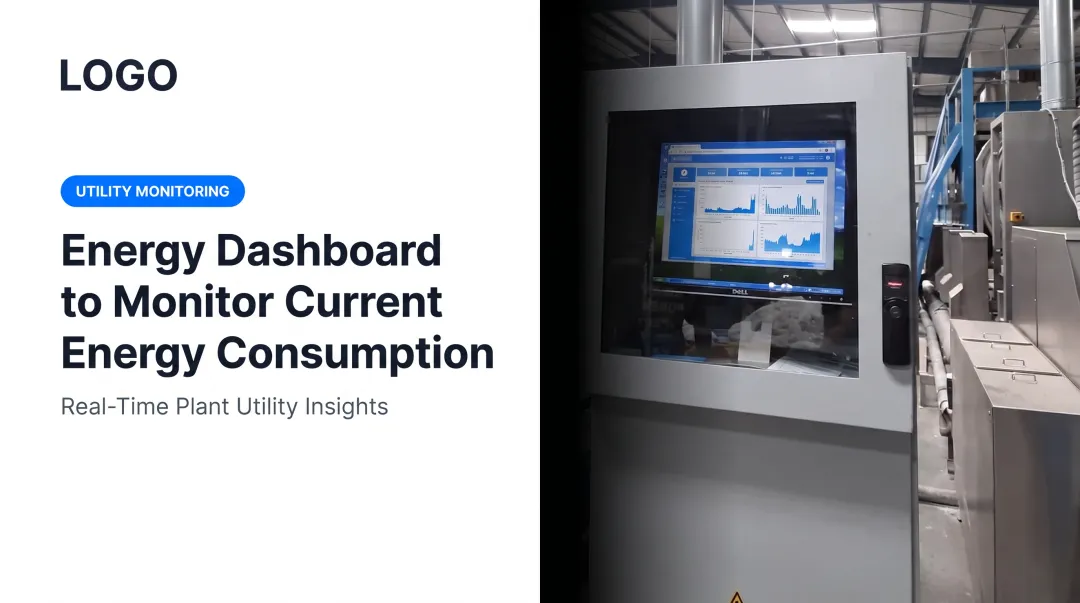
Softrol's UtiliPulse system is built for exactly this. It monitors customized metering points across a plant and tracks:
- Water consumption
- Natural gas consumption
- Electricity consumption
- Boiler stack temperatures and heat-reclamation flows
- Washer/extractor data and wastewater discharge
That utility data becomes part of the bigger operational picture through LOIS (Laundry Operation Information System), which gives plant managers 24/7 browser-based access to performance data, real-time email alerts, and reporting across multiple sites. When utility monitoring sits alongside production data, operators see the full cost and efficiency picture, not just isolated numbers.

Benefits and Challenges of Smart Metering
Like the automation systems used in industrial plants, smart meters trade manual processes for real-time data - with tradeoffs worth weighing.
Core benefits:
- Real-time consumption transparency
- Automated billing, no manual reads
- Energy savings through better visibility
- Demand-response participation, letting facilities shift usage during peak pricing
Core challenges:
- Data privacy concerns - NIST notes that granular usage data can enable behavioral inferences beyond what old billing data ever revealed
- Upfront installation costs, including meters, networks, and system integration
- Technical complexity retrofitting legacy facilities that weren't built with digital infrastructure in mind
Despite these hurdles, adoption keeps climbing: AMI meter counts grew from 127.8 million to 140.5 million in a single year, per EIA data. For facility operators, that trend signals smart metering is becoming standard infrastructure, not an optional upgrade.

Conclusion
Smart metering works through a continuous loop: capture data, transmit it securely, monitor for anomalies, and deliver usable output. That loop is what turns raw consumption numbers into decisions.
For industrial laundry operators, this principle plays out at scale. Integrating utility monitoring data into a broader Total Plant Management strategy turns raw consumption numbers into concrete cost savings, plant by plant, cycle by cycle.
Frequently Asked Questions
What is a smart metering system?
A smart metering system automatically captures, transmits, and analyzes energy consumption data without requiring manual meter reads. It covers electricity, gas, or water depending on the setup.
What are the two types of smart meters?
AMR (Automated Meter Reading) sends one-way billing data to the utility. AMI (Advanced Metering Infrastructure) supports two-way communication, real-time data, and remote control.
How is a smart meter different from a regular meter?
A regular analog meter requires a manual visual read. A smart meter records and transmits data digitally on its own, with no technician involved.
How often does a smart meter send data to the utility?
The EIA classifies AMI meters as recording at least hourly and delivering data at least daily. Many utilities configure more frequent intervals depending on their system design.
Are smart meters safe and secure?
Yes, though security isn't one-size-fits-all. NIST recommends approved cryptography, device-specific credentials, and periodic rekeying rather than a single universal standard.
Can smart metering data integrate with facility management or automation systems?
Yes, this is common in industrial settings. Softrol's UtiliPulse monitors utility consumption points, while LOIS consolidates that data with plant performance metrics for a fuller operational view.