
Cost depends on complexity, scale, integrations, and the industry the software serves. A marketing website and a plant automation system that runs 24/7 have almost nothing in common when it comes to pricing. This guide breaks down the ranges, the cost components, the factors that move the price, and how to budget accurately before you talk to a vendor.
TL;DR
- Typical range: $25,000 (MVP) to $1,000,000+ (enterprise platform)
- Price is driven mainly by feature complexity, integrations, design, and developer location
- Simple internal tools sit low; multi-system, compliance-heavy, or industrial platforms sit high
- Spend more when software drives efficiency or revenue directly; spend less to validate an idea first
How Much Does Custom Software Development Cost? (Pricing Overview)
Custom software has no fixed price tag. Two projects both labeled "plant client workspace" can differ by 10x in cost depending on scope, integrations, and design polish.
Common budgeting mistakes:
- Underbudgeting based on a rough guess instead of a scoped estimate
- Picking a team or engagement model that doesn't fit the project's complexity
- Ignoring post-launch costs like hosting, maintenance, and licensing
According to Artezio's 2025 breakdown, simple applications run $15,000-$50,000, medium-complexity builds run $50,000-$150,000, complex applications run $150,000-$500,000, and enterprise solutions run $500,000-$2,000,000+.
Typical Cost Ranges
| Tier | Cost Range | What's Included |
|---|---|---|
| Entry-level / MVP | $25,000-$75,000 | Single-process monitoring, simple client workspace, single-plant access |
| Mid-range / Standard | $75,000-$250,000 | Multi-system data tracking, basic hardware integration, role-based access |
| Enterprise / Industrial | $250,000-$1,000,000+ | Plant-wide automation controls, real-time data, full system integration |

These ranges cover design, development, testing, and deployment. They typically exclude hosting, licenses, and ongoing maintenance.
MVP / Entry-Level
Best for monitoring a single piece of equipment or process, such as a utility monitoring client workspace or a basic production counter. Expect a simple interface focused on one core function for a single plant.
Mid-Range / Standard
Ideal for systems that track productivity across several departments or integrate data from different controls. This could be a chemical dispensing management system or a wash aisle performance client workspace with role-based access for managers and operators.
Enterprise / Advanced
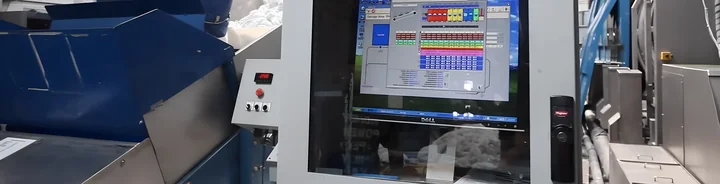
This tier covers comprehensive, plant-wide management platforms like Softrol’s Total Plant Management systems. It involves complex business logic, integration with all material handling and processing equipment, high availability, and real-time data for enterprise-level planning and control.
Key Factors That Affect the Cost of Custom Software
Feature Complexity and Scope
A basic login screen and an enterprise authentication setup with single sign-on, multi-factor authentication, and role-based access control are not remotely the same build. The complexity gap here can shift total cost dramatically, since each added layer requires its own testing, edge-case handling, and security review.
Integrations with Other Systems
Integrations are one of the most underbudgeted line items in any software quote. Per Artezio's cost breakdown:
- Simple API integration: $2,000-$8,000
- Complex legacy-system integration: $10,000-$50,000
- Custom API development: $15,000-$60,000
- Enterprise integrations (SAP, Salesforce): $30,000-$150,000+

Connecting to legacy or industrial systems, such as ERPs, plant sensors, or ticketing platforms, tends to land on the expensive end of that range.
Design and User Experience
Beyond integrations, design and UX typically account for 10-15% of total budget. A basic UI template costs far less than a fully custom, branded design system. Component costs break down roughly as:
- User research/analysis: $5,000-$20,000
- Wireframing/prototyping: $3,000-$15,000
- Visual design: $8,000-$35,000
Team Location and Expertise
US developer rates commonly run $24-$49/hour, according to Clutch's pricing guide. Eastern European teams often bill lower, but a cheaper hourly rate doesn't always mean a cheaper project. Communication gaps, time zone friction, and rework can erase the savings fast.
Industry-Specific Requirements
Regulated or operationally important industries carry extra weight. Healthcare, finance, and industrial manufacturing all need compliance, reliability, and real-time data features that push cost higher.
Softrol's own experience building plant management software for industrial laundry operators shows this in practice. At Crown Healthcare Laundry's Atlanta facility, the company's LOIS Rail control software had to coordinate a continuous-throughput system rated at 13,500 lbs/hour, two high-volume sort lines, and automatic weight registration.
The build also required an equipment interface with Milnor machinery, plus system-health monitoring and preventative-maintenance tracking. That's a fundamentally different build than a simple reporting client workspace.

Cost Breakdown of Custom Software Development
The initial build quote is rarely the full story. Total cost of ownership extends well past launch day.
- Initial development (one-time): Design, coding, testing, deployment
- Infrastructure & hosting (recurring): Cloud servers, databases, monitoring-roughly 5-10% of build cost plus monthly fees ($500-$5,000+/month)
- Maintenance & support (recurring): Patches, bug fixes, updates-often 15-20% of build cost annually, though some estimates run higher over a system's full lifecycle
- Third-party licenses/APIs (recurring): Payment processors, analytics, communication tools ($100-$2,000/month per service)
- Upgrades & feature expansion (periodic): New modules, scaling, platform migrations as the business grows

Budgeting for year one only, then getting surprised by year two, is one of the most common planning failures in custom software.
Fixed Price vs. Time & Materials - Which Pricing Model Fits?
Most vendors offer two pricing structures, and picking the wrong one can hurt either your budget or your flexibility.
| Factor | Fixed Price | Time & Materials |
|---|---|---|
| Budget certainty | Total cost defined upfront | Estimated range, billed on actuals |
| Flexibility | Low-requires change orders | High-adapts as requirements evolve |
| Best for | Small, clearly defined projects | Long-term or evolving projects |
The right choice depends on how well-defined your project is. Fixed-price contracts work well when requirements are locked in and the timeline is short. Time & materials fits better for long-term builds, R&D-heavy projects, or industrial software that develops iteratively alongside changing operational needs-think a plant management system that gets refined as new equipment or workflows come online.
How to Estimate the Right Budget for Your Project
Fit matters more than finding the lowest price. Before requesting quotes, work through these factors:
- Intended use, workload, and number of users - a tool for 10 people looks nothing like one for 1,000
- Required integrations with existing systems or equipment, for example plant machinery or utility monitoring hardware
- Compliance and industry-specific requirements that add scope
- In-house technical support and infrastructure readiness - can your team maintain this, or do you need ongoing vendor support?
- Long-term maintenance and scaling costs, not just the launch price
What Most Businesses Miss When Budgeting for Custom Software
Most budget overruns trace back to a few predictable blind spots. Watch for these:
- Focusing only on the upfront development quote and ignoring everything that follows launch
- Ignoring ongoing hosting, maintenance, and third-party fees that add up to real annual costs
- Over-specifying features that don't serve the core use case, inflating scope unnecessarily
- Choosing the lowest bidder without evaluating reliability, support quality, or industry experience
For example, plant management and utility-monitoring software often carries ongoing hosting and support fees well beyond the initial build, a cost businesses frequently underestimate until year two.
Conclusion
Custom software cost varies widely based on complexity, integrations, and the team you choose. A $25,000 MVP and a $1,000,000 enterprise platform can both be the "right" investment-it depends entirely on what the software needs to do.
Mapping out these cost drivers before you request quotes is what keeps a project on budget. The right cost isn't the lowest one; it's the one that balances performance, reliability, and long-term value.
Softrol has spent more than 35 years building automation and plant management software for the textile services industry, and that work depends on the same balance: real-time throughput monitoring and equipment integration that has to run reliably around the clock don't come cheap, but cutting corners on them costs far more later.
Frequently Asked Questions
How much does custom software development cost?
Custom software typically costs $25,000 to $1,000,000+, depending on complexity, integrations, and team location. Simple MVPs sit at the low end; enterprise or industrial platforms sit at the high end.
How much does it cost to develop custom AI software?
AI/ML applications often run $75,000 to $500,000+ due to data preparation and model complexity. Simple AI tools can start closer to $5,000-$20,000, according to Upwork's cost estimates.
How much does it cost to pay a software developer?
US developer rates commonly range from $24-$49/hour for most firms, with senior specialists charging more. Rates vary by experience level and specialization.
Is it cheaper to outsource software development?
Outsourcing can lower hourly rates, but cost savings aren't the top driver anymore-only 34% of companies cite cost as their main reason, down from 70% four years earlier, per Deloitte's 2024 Global Outsourcing Survey. Quality and communication trade-offs matter just as much.
How long does custom software development take?
Simple applications take 1-3 months, medium-complexity builds take 3-6 months, and enterprise solutions often take 12+ months. Timeline scales directly with scope.
Should I build custom software or buy an off-the-shelf solution?
Build custom when your workflows, integrations, or compliance needs don't fit an off-the-shelf tool. Buy when a commercial product already covers 80% or more of your requirements without heavy customization.