
The right one? Better efficiency, tighter cost control, and fewer headaches on the production floor. This guide compares the best textile software options across design/CAD, ERP/production, and plant automation for industrial laundries so you can find the fit for your operation.
TL;DR
- Textile software spans CAD/design, ERP/production tracking, quality management, and plant automation
- Match software to your segment: CAD for designers, ERP/MES for manufacturers, plant automation for laundries
- This list ranks options on functionality, specialization, integration, and reliability
- Softrol Systems leads in industrial laundry automation, backed by over 34 years of experience
Overview of Textile Software in the US Market
Textile software is any digital tool supporting design, production planning, quality control, or plant operations within textile manufacturing and services. As labor costs climb, US textile operators are leaning harder into automation software to keep throughput up without adding headcount.
The North America apparel software market is forecast to grow at a 7.5% CAGR from 2024 through 2031, with the US segment alone projected to reach $370.1 million by 2031, according to KBV Research. That growth reflects a broader shift: manufacturers and laundries alike are replacing manual processes with connected systems.
Below, we break down the leading platforms across each functional need, including:
- Design and pattern-making software
- Production and plant management systems
- Quality control and inspection tools
- Utility monitoring and chemical dispensing systems
Top Textile Software for 2025
These picks are chosen based on industry specialization, feature depth, reliability, and relevance to real textile production or services operations.
Softrol Systems (Total Plant Management / LOIS)
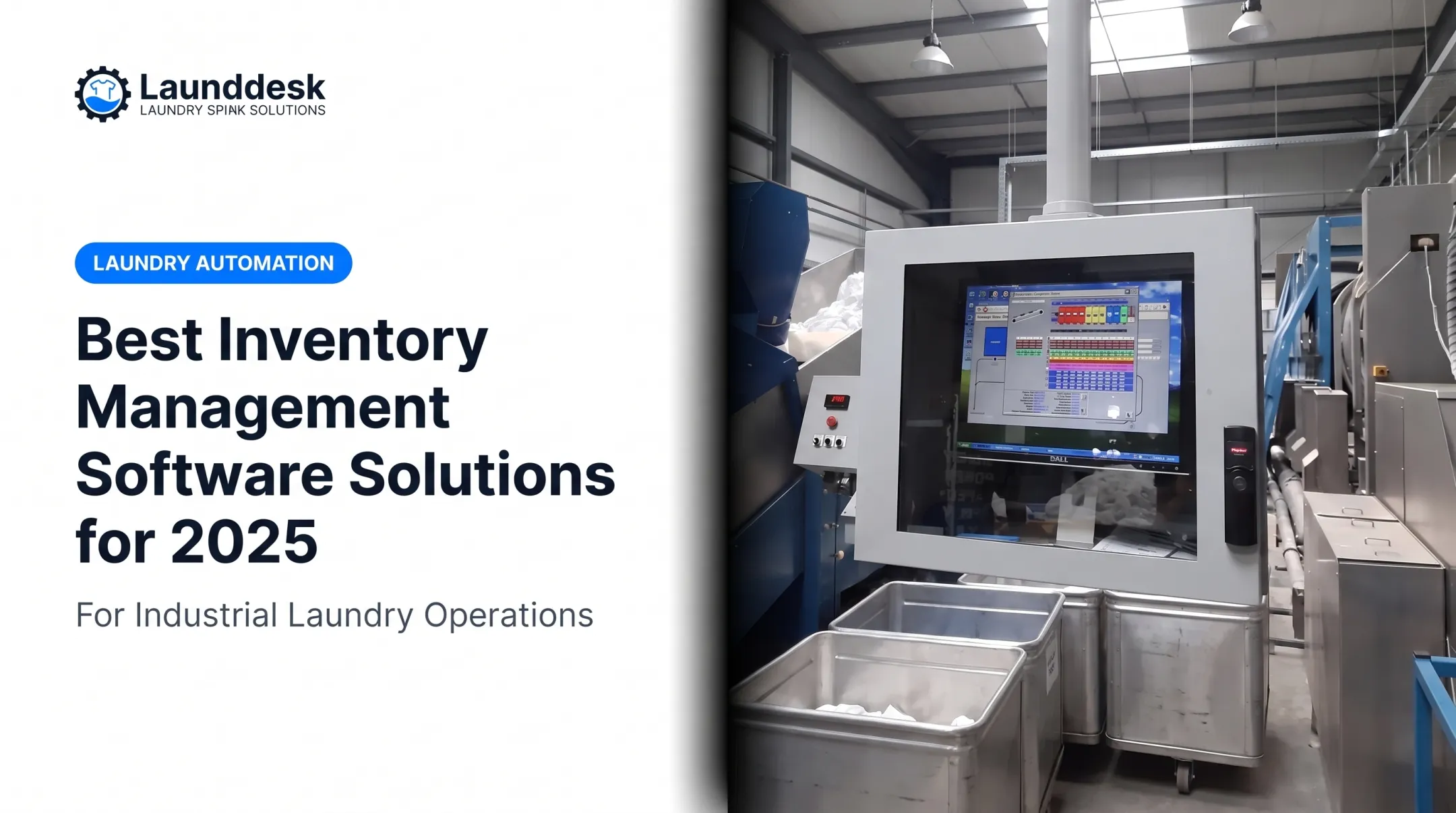
Since 1987, Softrol has built automation and software solutions specifically for the textile services industry, covering industrial, institutional, healthcare, and hospitality laundries. Its two flagship platforms, Total Plant Management and LOIS, give plant managers a single view of operations and remote access to performance data.
Total Plant Management acts as a single entry point for plant intelligence. It pulls real-time data from multiple production points, identifies bottlenecks fast, and tracks operator work, machine utilization, and throughput against capacity. Access works from any browser, on desktop or mobile.
LOIS extends that visibility off-site. It sends real-time email alerts, supports 24/7 monitoring of plant functions and employee performance, and lets one account manage multiple plant locations. It's available in both local and cloud-based installations.
On the labor side, results speak for themselves. Faultless Linen adopted Softrol's PulseNet Productivity System across ten workstations monitoring 30+ employees, and Pounds per Operator Hour jumped 35% in four months, from 90 to 140. Mission Linen's SoftSort implementation cut sorting labor from 13 employees to three while handling up to 3,500 garments per hour.
| Best For | Industrial, institutional, and hospitality laundries needing integrated plant management and remote monitoring |
| Key Features | Total Plant Management software, LOIS remote data access, real-time alerts, Catalyst chemical dispensing integration |
| Pricing | Custom quote based on plant size and system scope |

WFX (World Fashion Exchange) Apparel & Textile ERP
WFX is a fashion-native cloud ERP and PLM platform serving brands, manufacturers, and sourcing companies globally. Founded in 2000, it now serves over 55,000 users.
What sets it apart:
- Native ERP+PLM integration for style, season, and color management
- 3D sampling support through integrations with CLO3D and Browzwear
- Sustainability and traceability tracking for ESG and compliance needs
- MES capabilities via its Smart Factory module for floor-level production tracking
| Best For | Brands and manufacturers prioritizing speed-to-market and sustainability |
| Key Features | Style/season/color management, vendor collaboration, production monitoring |
| Pricing | Custom quote via demo request |
PolyPM Apparel Manufacturing ERP
Built by Polygon Software, PolyPM is an apparel-specific ERP/PLM connecting production tracking with materials, cutting, and shipping in one system.
Its standout feature is bundle-level WIP tracking - every operation, operator, handoff, and subcontractor delay gets logged. Mobile tote scanning shows bundle status in real time, and cut-ticket data links directly to downstream production tracking, with BOM and tech-pack details flowing straight into the shop floor.
| Best For | Garment manufacturers needing one connected system from design through shipment |
| Key Features | Barcode shop floor tracking, material consumption tracking, finished-goods allocation |
| Pricing | Custom quote via contact request |

Datatex NOW ERP
Datatex, established in 1987, built NOW ERP specifically for textile and apparel manufacturers, with customers spanning 45 countries. It's designed by textile engineers, not generic ERP developers.
NOW covers sales, planning, production, purchasing, and inventory, plus quality management and business intelligence. Its native CAMS module is a manufacturing execution system that pulls real-time shop-floor data - machine events, stops, operator performance - directly back into the ERP.
| Best For | Textile mills and vertically integrated apparel manufacturers |
| Key Features | Production planning, quality module, IoT integration, business intelligence |
| Pricing | Custom quote via consultation |
Adobe Illustrator (Fabric Design Software)
Illustrator remains the industry-standard vector tool for textile and fashion designers creating scalable prints and technical flats. It offers dependable pattern creation tools - repeats, radial patterns, grid and mirror repeats - plus deep file compatibility (AI, EPS, SVG, PDF, DWG, and more).
| Best For | Textile and fashion designers creating scalable prints and technical flats |
| Key Features | Vector editing, pattern creation tools, broad file compatibility |
| Pricing | Subscription starting around $22.99/month |
How We Chose the Best Textile Software
A common buyer mistake: picking software based on brand recognition alone instead of matching it to your actual segment - design, manufacturing, or plant operations. A great CAD tool won't help a laundry operator, and a dependable ERP won't control a wash aisle.
We evaluated each platform on:
- Industry specialization - built for textiles specifically, not adapted from generic software
- Integration capability - how well it connects with existing equipment and systems
- Real-time data visibility - client workspaces, alerts, and remote access
- Scalability - can it grow with the business
- Total cost of ownership - tied to measurable outcomes like reduced waste and lower labor costs

Conclusion
The "best" textile software isn't a single answer - it depends on matching the platform to your operational segment:
- Designers need CAD tools for pattern and design work
- Garment manufacturers need ERP systems built around BOMs and cut tickets
- Textile services operators need plant automation that controls machines, not just paperwork
Before committing to any vendor, dig into their implementation support, scalability, and willingness to build a long-term partnership. Software is only as good as the support behind it.
If you're running an industrial laundry or textile services operation, Softrol Systems' Total Plant Management software centralizes plant control through a single entry point, while its LOIS platform gives you remote access to real-time performance data and alerts.
Frequently Asked Questions
What is the best software for textile design?
Adobe Illustrator and CLO 3D are the most widely used tools: Illustrator for vector pattern creation, CLO 3D for 3D garment visualization. Choose based on whether you need flat 2D pattern work or full 3D simulation.
What is the best software for textile manufacturing?
Textile-specific ERPs like Datatex NOW, WFX, and PolyPM lead here because they handle style, BOM, and production data unique to textile manufacturing, unlike generic ERP systems.
What is the best software for a cloth shop?
Small cloth or fabric shops typically need simpler inventory and point-of-sale tools rather than a full ERP. Evaluate based on your shop's size and budget before considering enterprise-level systems.
How does plant automation software differ from apparel ERP?
Plant automation software like Softrol's Total Plant Management focuses on machine control, chemical dispensing, and wash aisle operations for textile services. Apparel ERP instead focuses on product development and order management.
What should industrial laundries look for in textile software?
Prioritize remote monitoring, real-time alerts, chemical system integration, and features specifically aimed at reducing labor costs. These directly impact day-to-day plant performance.
Is cloud-based textile software better than on-premise systems?
Cloud-based systems generally offer easier remote access and scalability, while on-premise may suit facilities with specific data control requirements. Many platforms, including LOIS, now support both.