
Key Takeaways
- Permit-specific monitoring ranges from continuous pH tracking to quarterly sampling per Control Authority rules
- Important parameters include pH, temperature, flow rate, total suspended solids (TSS), and chemical oxygen demand (COD)
- Facilities become Significant Industrial Users at 25,000 gallons per day of process wastewater, triggering stricter monitoring
- Inline sensors, automated sampling, and data logging enable compliance documentation
- Clean Water Act violations carry penalties up to $68,445 per day
What Is Laundromat Wastewater Monitoring?
Wastewater monitoring tracks and analyzes discharge from commercial laundry operations.
The practice includes both compliance monitoring-the legally required minimum-and operational monitoring that optimizes resource use and protects infrastructure.
Compliance vs. Operational Monitoring
Compliance monitoring satisfies federal 40 CFR Part 403 prohibitions and local pretreatment standards set by the Control Authority (typically the municipal wastewater treatment plant). This baseline tracks parameters specified in your facility's permit at mandated intervals.
Operational monitoring provides real-time process insights. It optimizes chemical dosing, detects equipment malfunctions, and reduces operating costs. While compliance monitoring is mandatory, operational monitoring is a strategic investment that pays dividends through efficiency gains.
Primary Wastewater Contaminants
According to EPA industrial laundry characterization data, typical discharge contains approximately 1,000 mg/L average concentrations of BOD5 (biological oxygen demand), TSS (total suspended solids), and oil/grease.
The specific pollutants in your wastewater depend heavily on the textiles you process:
- Detergents and surfactants (measured as MBAS-methylene blue active substances)
- Suspended solids from lint, dirt, and fabric particles
- Grease and petroleum oils from shop towels and industrial textiles
- Heavy metals (copper, lead, zinc, chromium, cadmium) from dyed fabrics
- pH variations from alkaline detergents and acidic neutralizers
- Volatile and semivolatile organic compounds from specialty cleaning agents
Shop towel processing generates substantially higher pollutant loads than standard uniform washing. This makes textile-type a important factor in designing your monitoring program.

Sampling Methods: Point-in-Time vs. Continuous
Point-in-time sampling captures wastewater conditions at specific intervals through two methods:
- Grab samples: Single collection at one moment, required by federal law for pH, cyanide, phenols, oil/grease, sulfide, and VOCs
- Composite samples: Multiple collections combined over 24 hours, representing average discharge
Continuous monitoring uses inline sensors to track parameters every second. This approach captures excursions that periodic sampling misses and provides immediate alerts when readings drift outside acceptable ranges.
Three Important Connection Points
Effective monitoring addresses:
- Regulatory compliance: Meet EPA Part 403 standards and local limits to avoid penalties
- Equipment protection: Prevent scale buildup, corrosion, and pipe damage
- Operational efficiency: Optimize chemical dosing by comparing discharge levels against usage rates
Why Wastewater Monitoring Is Important for Laundromats
Wastewater monitoring protects your facility from financial and operational risk while creating measurable cost savings. This essential infrastructure goes beyond regulatory compliance to deliver tangible business value.
Key Business Benefits
Current Clean Water Act civil penalties can reach $68,445 per day for each violation. The UniFirst Lebanon, NH case demonstrates real enforcement: EPA proposed $64,000 in penalties for detergent and acidic discharge violations.
Beyond fines, violations trigger increased monitoring requirements, potential discharge permit suspension, and facility shutdown orders.
Acidic discharges (pH below 5) corrode pipes, pump housings, and treatment equipment. Alkaline slugs (pH above 12) cause scaling and mineral deposits, while excessive suspended solids clog sewer lines.
Monitoring catches these conditions before they damage infrastructure, avoiding repair costs that far exceed monitoring investments.
Tracking actual discharge pollutants against chemical dosing rates reveals over-application. When your wastewater shows surfactant levels double your theoretical usage, you're washing money down the drain. Monitoring provides the data to right-size chemical programs.
Federal regulations require facilities to maintain monitoring records for at least 3 years, with many local permits mandating 5 years.
Systematic monitoring creates the documentation trail required for permit renewals, regulatory audits, and defending against potential violations.
Real-time monitoring catches operational problems early:
- Sudden flow increases indicate leaks or valve failures
- Unexpected pH spikes signal chemical system malfunctions or operator errors
- Temperature anomalies warn of cooling system problems
- Alerts arrive within minutes, not days later when damage compounds

Documented water and chemical efficiency supports green business certifications and attracts environmentally conscious customers. Your facility may also qualify for utility rebates or tax incentives for pollution prevention.
How Wastewater Monitoring Works – Step by Step
Effective monitoring requires systematic planning, proper infrastructure, baseline data, disciplined execution, analytical rigor, and continuous improvement. Common failures include inadequate sampling frequency, skipping baseline establishment, purely reactive monitoring, and poor record-keeping.
Step 1 – Establish Monitoring Objectives and Regulatory Requirements
Start by identifying your specific legal obligations, not generic industry standards.
Research applicable regulations: Federal 40 CFR Part 403 sets universal prohibitions against discharges that cause pass-through, interference, fire/explosion hazards, corrosive conditions below pH 5, obstructive solids, excessive BOD/flow, extreme heat, interfering petroleum oils, or toxic gases.
Your local Control Authority (municipal treatment plant) sets additional limits specific to your region.
Identify required parameters: Contact your Control Authority to obtain your facility-specific requirements. Typical parameters include pH, temperature, flow rate, TSS, BOD5 or COD, and specific pollutants based on your textile types.
Don't assume your neighbor's requirements match yours.
Determine monitoring frequency: Significant Industrial Users must report at least twice annually, but your Control Authority may require daily, weekly, or monthly monitoring depending on your discharge volume and pollutant loading.
For example, a California self-service laundry with 36 washers required monthly flow measurement and quarterly grab sampling; a large Connecticut industrial laundry faced continuous pH monitoring plus monthly and quarterly lab analysis.
Step 2 – Install Monitoring Infrastructure
Strategic placement and proper equipment selection make the difference between useful data and expensive noise.
Select monitoring points: Install monitoring capability at three important locations:
- Individual wash machine discharge lines (identifies problem machines)
- Chemical injection points (verifies dosing accuracy)
- Final sewer connection before discharge (compliance measurement point)
Install flow meters: Electromagnetic or ultrasonic meters track total discharge volume and detect abnormal patterns. Facilities reaching 25,000 gallons per day become Significant Industrial Users, triggering stricter monitoring; accurate flow measurement determines your regulatory category.
Deploy inline sensors and sampling infrastructure: Continuous pH and temperature probes provide real-time data, while conductivity sensors detect salinity changes.
Install sampling ports with proper isolation valves for collecting grab and composite samples. Ensure sample points are accessible, properly labeled, and meet chain-of-custody requirements.
Step 3 – Establish Baseline Data
Before you can identify problems, you must understand normal.
Conduct comprehensive initial testing: Run a full analysis across all required parameters during typical operations.
Test during heavy production periods, light days, different textile types, and various shift patterns to capture operational variability.
Document operational variations: Record how discharge characteristics change by time of day, load type (uniforms vs. shop towels), machine usage patterns, and chemical program changes. A baseline range, not a single value, represents normal operations.
Set alert thresholds: Configure alarms based on regulatory limits (never exceed) and equipment protection parameters (proactive warnings before limits are reached).
Set flow alerts at 80% of your Significant Industrial User threshold to provide advance warning before crossing into stricter regulatory categories.
Step 4 – Implement Ongoing Monitoring and Sampling
Disciplined execution transforms monitoring infrastructure into actionable compliance.
Execute regular sampling schedule: Follow your permit's specified frequency and method. Grab samples are federally required for pH, oil/grease, and certain volatile compounds; composite samples represent average conditions for most other pollutants.
Use approved collection techniques-improper sampling ruins results.
Use certified laboratories: Compliance samples require 40 CFR Part 136 approved analytical methods. Select an accredited lab experienced with industrial wastewater.
For operational monitoring, consider on-site testing equipment for faster turnaround, but never substitute for required compliance testing.
Maintain chain-of-custody: Document every sample with collection date, exact location, sampling method and time, sampler identity, analysis date, analyst, analytical method, and result.
Missing documentation makes otherwise compliant results invalid during audits.
Step 5 – Analyze Data and Identify Trends
Raw data becomes valuable when interpreted systematically.
Review against benchmarks: Compare each result to regulatory limits, baseline ranges, and operational targets. Flag excursions immediately. A single out-of-range result may be an anomaly; repeated trends signal process changes or equipment drift.
Look for patterns: Declining pH during third shift suggests operator procedural variations. Rising TSS over months indicates filter deterioration or machine seal wear. Flow spikes on Tuesday mornings may reflect production schedule patterns or equipment warm-up procedures.
Calculate operational metrics: Track gallons per pound of laundry processed (typical industrial facilities target 2.6-3.2 gallons per pound). Calculate chemical efficiency by comparing theoretical usage based on loads processed against actual discharge concentrations. Monitor discharge quality consistency-high variation indicates poor process control.
Step 6 – Take Corrective Action and Optimize
Monitoring delivers value only when insights drive action.
Respond immediately to compliance excursions: Out-of-limit readings trigger immediate investigation. Isolate the source, implement corrective measures, and verify effectiveness through follow-up sampling. Notify your Control Authority as required by your permit-voluntary disclosure often reduces penalties compared to discovered violations.
Adjust operations based on monitoring insights: High surfactant discharge despite low soil loads? Reduce detergent dosing. Temperature readings above optimal range? Check heat exchanger performance. Consistent results below permit limits with significant margin? Document the buffer as evidence supporting permit flexibility requests.
Document everything: Maintain a corrective action log recording the date, finding, root cause analysis, action taken, responsible party, and verification result. This documentation demonstrates good-faith compliance efforts during audits and provides institutional knowledge for training.

Monitoring Methods and Technologies
Technology selection balances regulatory requirements, operational needs, budget constraints, and facility size.
Manual Sampling and Lab Analysis
Traditional grab sampling at scheduled intervals with off-site laboratory testing remains the compliance backbone for most facilities.
How it works: Operators collect samples at permit-specified times using proper technique and containers. Samples go to a certified laboratory for analysis using approved methods.
Laboratories return results within days to weeks depending on parameters tested.
Strengths: Lowest upfront capital cost. Approved analytical methods cover the full spectrum of regulated pollutants-TSS, BOD5/COD, metals, oil/grease, surfactants, volatile organics, and pesticides.
Certified lab results provide defensible compliance documentation.
Limitations:
- Delayed results provide historical, not real-time, information
- Short excursions between sampling intervals go undetected
- Labor-intensive for high-frequency monitoring
- Chain-of-custody procedures add administrative overhead
- Cannot trigger automatic process responses
Best for: Small facilities with low discharge volumes, quarterly or monthly monitoring requirements, and limited capital budgets. Also essential even in automated facilities for parameters requiring laboratory analysis.
Continuous Automated Monitoring Systems
For facilities requiring faster response times, inline sensors with data logging and real-time alerts transform monitoring from periodic snapshots to continuous surveillance.
How it works: pH probes, temperature sensors, conductivity meters, and flow sensors install directly in discharge lines. Measurements transmit to data loggers or control systems every few seconds. Software compares readings against configured thresholds and sends immediate alerts via email or text when excursions occur.
Strengths:
- Immediate detection enables rapid response before minor issues become major violations
- Captures short-duration excursions that manual sampling misses
- Eliminates labor for routine readings
- Historical data reveals trends invisible in periodic samples
- Integrates with plant control systems to automatically adjust chemical dosing or trigger process holds
Limitations:
- Inline sensors require regular calibration to maintain accuracy
- Fouling from suspended solids and chemical films requires cleaning
- Initial capital cost higher than manual programs
- Most sensors measure only pH, temperature, conductivity, and flow-not the full compliance panel
- Does not eliminate manual sampling requirements unless specifically permitted
Best for: Facilities exceeding 25,000 gallons per day, operations with tight permit limits, facilities with history of violations, and plants pursuing operational optimization beyond basic compliance.

Integrated Plant Management Systems
The most sophisticated approach combines wastewater monitoring with chemical control, equipment status, and operational data for total plant visibility.
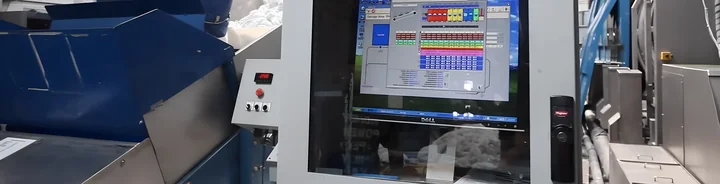
How it works: A central software platform aggregates data from wastewater sensors, chemical injection systems, wash aisle controls, utility meters, and equipment monitors. Single-screen client workspaces display real-time status across all systems.
Historical trending identifies relationships between operational variables and discharge quality. Predictive analytics warn of developing issues before they cause violations.
Strengths:
- Holistic view reveals connections between chemical dosing, wash parameters, and discharge quality
- Centralized alerts reduce monitoring burden
- Remote access enables off-site oversight
- Automated reporting simplifies compliance documentation
- Integration enables closed-loop control where monitoring data automatically adjusts process parameters
Limitations: Highest initial investment. Requires integration expertise to connect diverse systems. More complex to configure and maintain. Value scales with facility size-may be overkill for small operations.
Best for: Large multi-machine facilities, operations with multiple sites requiring centralized oversight, facilities pursuing maximum operational efficiency, and plants with dedicated technical staff.
How Softrol Systems Can Help
Softrol's 35+ years of experience in textile services automation extends to comprehensive water and wastewater management through integrated control systems designed specifically for industrial laundry operations.
Total Plant Management Solutions for Integrated Monitoring
UtiliPulse plant and utility monitoring: The UtiliPulse system monitors customized utility metering points including water consumption, temperatures, and flows associated with wastewater discharge.
The platform tracks any number of metering points across your facility, capturing real-time data on discharge volumes, process temperatures, and flow patterns that form the foundation of effective wastewater management.
LOIS remote access and visibility: The Laundry Operation Information System (LOIS) provides 24/7 browser-based access to plant performance data from smartphones, tablets, and PCs. Real-time email alerts notify management of abnormal conditions.
Key capabilities include:
- Multi-site monitoring through a single user account
- Centralized oversight of geographically distributed facilities
- Client workspaces with current production information and historical trending
- Simplified compliance documentation
Catalyst and ChemPulse chemical systems: These chemical injection systems use flow-meter-based volumetric dosing with water-flush verification. When integrated alongside wastewater monitoring, operators can correlate chemical delivery records with discharge characteristics to optimize dosing and reduce pollutant loading.
Chemical-delivery-failure alarms and real-time feedback prevent over-application that wastes money and creates discharge violations.
Proven track record: Since 1987, Softrol has partnered with major commercial laundries including Aramark Uniform Services, Crown Health Care Laundry Services, and other national accounts. Gildan Activewear's Rio Nance facility implemented Softrol's automated chemical delivery for 13 chemicals serving eight dye machines and a tunnel bleaching range-a scope that demands reliable monitoring and control.
These monitoring capabilities integrate seamlessly with Softrol's broader automation ecosystem, creating comprehensive plant management solutions.

Comprehensive Automation Beyond Monitoring
Single-source integration: Complete plant automation spans from wash process control to material handling to utility monitoring. Rather than coordinating multiple vendors with incompatible systems, this integrated approach ensures seamless data flow from wash aisle through chemical dosing to discharge monitoring.
AutoPulse wash automation, Catalyst chemical systems, UtiliPulse monitoring, and LOIS management interface work as integrated solutions, not retrofitted combinations.
Complete project support: Support begins before purchase with facility assessment and system design. The project lifecycle includes:
- Installation and commissioning services
- User training for operation and maintenance
- Ongoing 24/7/365 technical support
This comprehensive support reflects Softrol's philosophy of partnering with customers for joint success.
Modular scalability: Start with the monitoring capabilities your permit requires today, then expand as regulations tighten or operational goals evolve. Softrol's distributed, networked architecture allows incremental system growth without wholesale replacement.
To explore how Softrol's integrated monitoring and control solutions can address your facility's specific wastewater management needs, contact the engineering team at Softrol's Acworth, Georgia headquarters.
Frequently Asked Questions
What are the most important wastewater parameters to monitor in a laundromat?
pH, temperature, and flow rate form the foundational trio for continuous monitoring. TSS and COD/BOD5 require periodic laboratory analysis, while additional parameters vary by textile type and local permit-metals for industrial textiles, surfactants (MBAS) for self-service operations, and petroleum oil for shop towel facilities.
How often do laundromats need to sample wastewater for compliance?
No universal EPA schedule exists-frequency varies by discharge volume and local Control Authority requirements. Significant Industrial Users report at least twice annually, with actual sampling ranging from continuous pH monitoring to quarterly grab samples based on facility size.
What are the penalties for wastewater violations in commercial laundries?
The current Clean Water Act section 309(d) civil maximum is $68,445 per day for each violation. Beyond fines, violations trigger increased monitoring requirements, permit suspension, facility shutdown orders, and potential criminal charges for knowing violations.
Can automated monitoring systems reduce operating costs?
Yes-automated monitoring optimizes chemical dosing, detects equipment failures early, reduces compliance testing frequency where permits allow, and minimizes penalties through immediate excursion detection. Savings scale with facility size and current efficiency levels.
Do small laundromats need the same monitoring as large facilities?
No-requirements scale with discharge volume and pollutant loading. Facilities become Significant Industrial Users at 25,000 gallons per day, triggering stricter monitoring. Small self-service laundries may need only monthly flow measurement and quarterly sampling, while large operations require continuous pH monitoring plus extensive laboratory analysis.
How long should wastewater monitoring records be kept?
Federal regulations require minimum 3-year retention, extended during unresolved litigation or when requested by regulators. Many local permits mandate 5 years. Best practice: retain records longer than required minimum for trend analysis, defending against potential claims, and demonstrating consistent compliance history during permit renewals. Digital storage makes extended retention inexpensive insurance.